




Wasp and hornet control
Wasp and hornet nests under eaves, in fences and sheds, or in the ground near decks and walkways.
Wasp and hornet control in the GTA →Skedaddle GTA — humane wildlife removal across Mississauga, Peel Region, from the Port Credit waterfront to Meadowvale Village.
No traps. No poison. Permanent exclusion.
Skedaddle Humane Wildlife Control handles raccoons, mice, squirrels and nesting birds for Mississauga homeowners throughout Peel Region, from Lakeview and Clarkson on the lake to Streetsville, Meadowvale and Malton in the north. A technician first works out which animal is inside and where it got in, then removes it humanely, takes out any babies by hand and closes the opening for good. Through the winter, much of our Mississauga work is capping chimneys and sealing attics before raccoon mothers look for a place to have their kits, and stopping mice that have moved into basements and garages to get out of the cold.
Mississauga packs high-rises, older lakeside streets and new subdivisions around one long river valley, so wildlife is never far from a roofline. Homeowners here tend to want the same three things from us: an animal moved out without harm, a home it can't get back into, and a clear price before anything starts.
The Credit River runs down the middle of Mississauga, and much of the city's green space follows it. Riverwood covers 150 acres of woodland, meadow and ravine beside the river, Erindale Park is the largest park in the city, and the University of Toronto Mississauga campus sits on the same wooded banks. On the lake, Rattray Marsh is the last remaining lakefront marsh between Toronto and Burlington. Raccoons, squirrels and skunks use these corridors to reach backyards, and our crews completed more than 620 wildlife and pest jobs in Mississauga over the past 12 months.
Skedaddle technicians follow written procedures for working on roofs, entering attics and sealing out each species, and SPCAs and Humane Societies approve our humane methods. Every job stays inside Ontario's rules for wild animals damaging property, including release within one kilometre. Mississauga Animal Services does not remove healthy wildlife from homes, and the City suggests choosing a removal company that reunites mothers with their young, which is how we work.
Getting the animal out is half the job; the other half is making sure nothing else gets in. Each opening we close is covered by a lifetime guarantee on all workmanship and materials, and if a seal ever lets an animal through, we return and repair it at no cost. To make that promise, the inspection records every weak spot on the house, from the chimney crown to the foundation, before we price anything. It applies equally to a century-old home near the Streetsville village core and a townhouse in Churchill Meadows.

Business Development Manager
Brandon has worked at Skedaddle since 2002, and over that time he has helped take the company across Canada and into the United States. He was raised in St. George, Ontario, and finished his studies at Sir Sandford Fleming College in 1999. A solid grounding in construction, plumbing and heating, together with attic restoration, insulation and Ontario energy audit training, makes him a natural lead on big residential and commercial projects. Family time outdoors with his two young boys fills his days off.

Supervisor
Keith earned two credentials from Northern College: Veterinary Technician in 2002 and Veterinary Wildlife Technologist in 2006. He then cared for animals at the Temiskaming Wildlife Centre, the Shepreth Wildlife Sanctuary and the Muskoka Wildlife Centre, and came to Skedaddle in 2011. Like the company, he wants homeowners and wildlife to share space peacefully, and he sees education as the way to make that work.

Wildlife Specialist
Dillon graduated from Sir Sandford Fleming College with two diplomas, one in Fish and Wildlife Technology and one in Forestry. A job that keeps him outside and around animals suits him well. When he isn't on a call, he is likely out with a fishing rod or with the people closest to him.

Wildlife Technician
Ben was born in Newfoundland, grew up in Ontario and joined Skedaddle Humane Wildlife Control after completing the Fish and Wildlife program at Fleming College. He spends his free time outside, often on a canoe trip or at a campsite.

Assistant Manager
Joseph completed Fleming College's Fish and Wildlife Technician program in 2014 and went on to work in roofing, framing and decorative concrete. Knowing how houses are built helps him close them up against wildlife. Two calls stand out for him: carefully lifting coyote pups from beneath a client's shed, and getting a trapped adult skunk out of a window well without a single spray. He spends his own time fishing, caring for reptiles and playing paintball.

Wildlife Specialist
James grew up and spent most of his life in the United Kingdom, where he worked in education and IT, before turning to humane wildlife control. He gets real satisfaction from helping homeowners feel settled again once a wildlife problem is solved. Outside work, he is on the soccer field with his son and daughter or following London's Arsenal F.C.

Wildlife Technician
Brad came to Skedaddle in 2018 after more than eight years in the restaurant business, where teamwork, clear communication and good service were part of every shift. He also brings carpentry, welding and automotive skills to the job. Seeing a mother raccoon collect her babies after a removal is what he enjoys most, and finding a mother fox and six pups beneath a shed is a call he still remembers.

Director of Technical Operations
Corey has been with Skedaddle since 1999, when he started out as a technician, and has worked his way up to lead the company's technical side. He holds a Fish and Wildlife Technology diploma from Sir Sandford Fleming College. He has sat on the Board of Environment Hamilton and advised the Region of Niagara's Water Quality Protection Strategy on the natural environment. In 2001 he received the Dr. Victor Cecilioni Environmentalist of the Year Award, followed by National Wildlife Technician of the Year for 2001/2002. He belongs to the Hamilton Naturalists' Club and the Ontario Field Ornithologists.

Pest Technician Supervisor
Clayton spent more than 10 years as a produce and store manager with a national grocery chain before joining Skedaddle, drawn by the chance to work outdoors and take on something new. He likes helping Mississauga homeowners and business owners understand and solve their pest problems. Away from work, he spends time with his family and heads out on the lake to fish whenever he can.
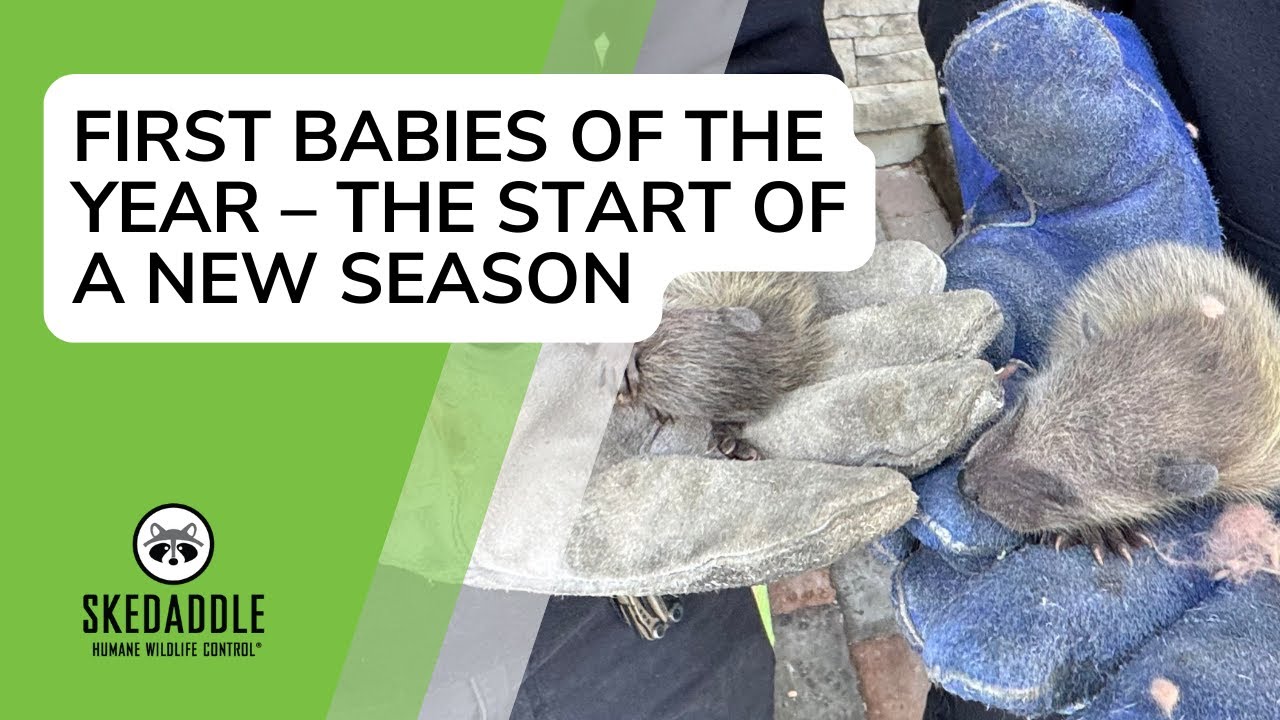
In this clip from a Mississauga home, Skedaddle technicians Chris and Nathan check an attic, lift out a litter of baby raccoons by hand and set them in a heated box so their mother can carry them to a new den.
Most of our Mississauga wildlife work comes down to four animals: raccoons, mice, squirrels and birds. Mature trees reach over rooftops, the Credit River valley brings animals deep into the city, and vents on houses, townhomes and commercial buildings give birds easy nesting spots. Each card explains how that animal gets in and how we deal with it, and the seasonal chart lower on the page covers timing.
Raccoons bring in more of our Mississauga wildlife work than any other animal. They settle into attics, chimneys and the space under roof vents, and a female may have kits tucked away with her, so we check for young before anything is closed. The entry is then rebuilt with a chimney cap or heavy vent guard, the same steps the City recommends. Feeding raccoons or any wildlife is illegal in Mississauga under the Animal Care and Control By-law.
Mice make up the most Mississauga call-outs of any animal, and once house mice are indoors they can breed at any time of year. They slip in through gaps at the foundation, around pipes and wires and under garage doors. The City's home-protection advice starts with taking away food and water; we add the structural side, finding each opening, sealing it with materials mice can't chew and cleaning up the droppings and nests they left.
Grey squirrels stay active all year instead of hibernating, so a Mississauga attic can pick up a squirrel at any point, and it is often a female getting a nest ready. We find where she chewed in, usually a soffit, gable vent or roof edge, check the insulation for babies and close the hole with heavy-gauge material she can't gnaw through.
Birds rank fourth in our Mississauga wildlife work, ahead of rats, skunks and bats. Starlings and sparrows build nests in dryer, bathroom and kitchen exhaust vents, and pigeons settle on ledges, signs and flat commercial roofs. We remove the nesting material, clean the vent and fit a guard that lets air out without letting birds back in. For businesses, our commercial bird control keeps pigeons off buildings.
Rats, skunks and bats round out our Mississauga work. Rat removal centres on the foundation, because the Region of Peel rat prevention poster warns that gaps the size of a quarter are big enough to let them in. Skunk removal ends with a screen dug in under the deck, porch or shed, as the City advises. Bat removal follows the Ontario MNR guidance and starts by checking for bats roosting inside; Peel Public Health confirmed rabies in a bat found near Derry Road and McLaughlin Road in August 2025.
Each animal tends to make its own noise: a quick scurry inside the wall, heavy steps across the ceiling after dark, or fluttering and chirping from a vent. We'll inspect your Mississauga home to name the animal and find its way in, and you'll get a written plan before any work starts.
We serve the whole City of Mississauga in Peel Region, from the Lake Ontario shoreline at Port Credit and Lakeview up to Meadowvale Village and Malton. The names below are the 23 neighbourhood character areas in the City's Official Plan. We'll confirm your address when you book, and if your street isn't listed, give us a call and we'll check.
Every Mississauga inspection covers the outside of the house and the spaces inside it, and you get a written plan and price at the end. The technician names the animal, traces each opening from the roof down to the foundation and talks you through what needs doing. Here is how a visit runs:
Cleanup and sealing are priced together on one written estimate, so you see the whole job before saying yes. Call (416) 417-2939 or book online to arrange your inspection.
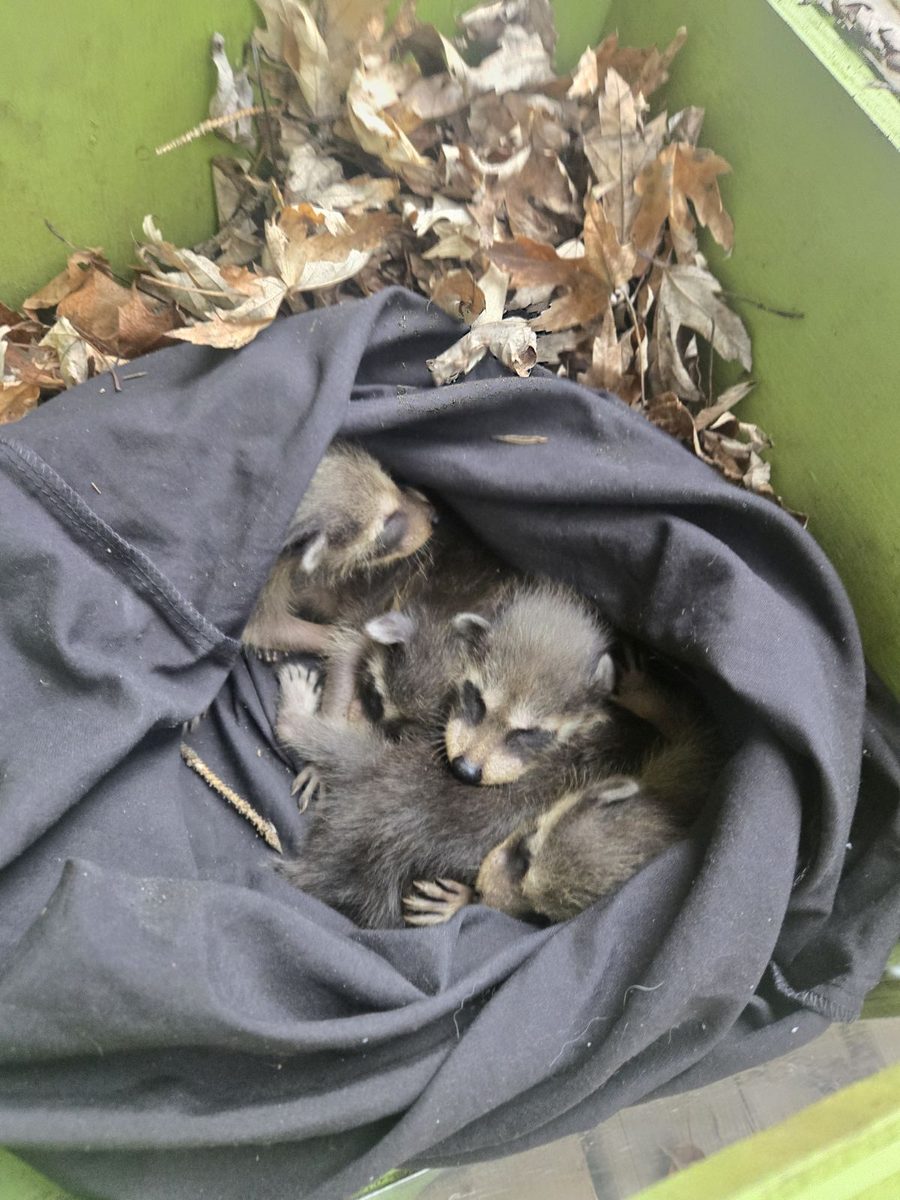

We start by inspecting your Mississauga home to identify the animal, follow its path inside and see which parts of the attic, walls or crawl space it uses. After checking for dependent young, we choose a humane removal method that fits the species and the timing. One-way devices are used only where the situation calls for them, never by default.
Learn more
When the animals are out, we review the contamination with you and agree on the cleanup. That might mean removing droppings, nests and soiled insulation, decontaminating the area and replacing insulation that was damaged. Plenty of homes only need a spot cleanup, and we quote only what your attic needs.
Learn more
Once we know the animals have left, we seal every confirmed and possible entry point with durable materials chosen for the species, including chimney caps, vent guards and screens buried along the foundation. All of this exclusion work is covered by a lifetime guarantee on all workmanship and materials.
Learn moreMississauga sits on Lake Ontario in Peel Region, with cold, snowy winters and hot summers. The chart shows how local wildlife changes over the year and how we plan our work for each stretch. It reflects our planning priorities, not call volumes.
| Season | Wildlife focus | Our service focus |
|---|---|---|
| Winter (December–February) |
Raccoons resting in attics and chimneys, with mating starting in January; grey squirrels mating and nesting in attics; mice settled inside walls, basements and garages; skunks denned under decks and sheds; some big brown bats hibernating in buildings | Cap chimneys and close roof openings before raccoon kits arrive; trace and seal mouse entry; block deck and shed openings before skunks breed; confirm no bats remain before any full seal |
| Spring (March–May) |
Raccoon kits and baby squirrels in attics and chimneys; skunks raising young under decks and sheds; starlings and sparrows nesting in vents; bats returning to roosts | Lift out young by hand so mothers can move them; clear and guard vents; bat exclusion from April to early May, with one-way doors where they suit the roost; seal dens once empty |
| Summer (June–August) |
Bat pups in roosts from mid-May to mid-August; squirrels having second litters; young raccoons and skunks on the move | Wait to exclude bats until pups can fly; screen under decks and sheds; repair rooflines |
Quarterly focus: Winter (December 2026–February 2027)
This winter, our Mississauga crews are focused on closing chimneys and attics before raccoons mate in January and squirrels have their first litters in February, and on keeping mice out of basements, walls and garages. In practice, that means chimney caps, sealed soffits and gable vents, mouse entry tracked back to the foundation and utility lines, and decks closed off before skunks breed. We check every roof space for bats before sealing it, since the Ontario MNR bat exclusion guide says a building should not be fully sealed while bats are still inside.
Raccoons in a Port Credit chimney and starlings in a Meadowvale dryer vent need very different fixes, but every Mississauga job runs on the same four principles. The method changes with the animal; the standards don't.
We decide on the method after the inspection, not before. Depending on the animal and the opening, the plan can include one-way exclusion doors where appropriate, taking young out by hand, species-specific guards on vents and chimneys, or a schedule that works around a maternity period. Bats show this best, since provincial guidance sets when an exclusion can happen.
Raccoons, squirrels and skunks in Mississauga often raise their young right where a homeowner needs a seal. When we find babies, we take them out by hand and put them in a warmed reunion box beside the entry, so their mother can move them to another den. The opening is closed only after the whole family is gone. No animal is sealed inside, and the mother has no reason to tear a new hole to get back in.
Raccoons, squirrels and mice all leave droppings and urine and tear up insulation, and a long stay can flatten insulation across much of an attic. We take out the contaminated material, decontaminate the space and replace damaged insulation so the attic insulates properly again. You see the cleanup scope on your quote before we start.
Ontario law has us release removed wildlife within one kilometre of your home, so distance doesn't keep it away; a solid seal does. We close each opening with materials built for the animal involved, from heavy-gauge vent guards to screens buried beneath decks. That work carries a lifetime guarantee on all workmanship and materials, and if a sealed opening ever fails, we come back and fix it.
MISSISSAUGA · PEST CONTROL
The GTA team that handles wildlife in Mississauga also handles pests, using eco-friendly products and closing the cracks and openings insects use to get inside. Restaurants, offices, warehouses, retailers and property managers across the city can arrange commercial pest control built around how their buildings are used. For homes, the Four Seasons Pest Control program provides year-round protection through four scheduled visits. We treat:
Wasp and hornet nests under eaves, in fences and sheds, or in the ground near decks and walkways.
Wasp and hornet control in the GTA →
Carpenter ants tunnelling into wet or rotting wood, and pavement ants trailing in from driveways and patios.
Ant control in the GTA →
Cockroaches hiding near kitchen appliances and plumbing, or spreading between units in condos and townhouses.
Cockroach control in the GTA →
Itchy bites, small dark stains on bedding, or signs that show up after a trip or a second-hand furniture buy.
Bed bug control in the GTA →
Spiders building webs in basements, garages, window frames and other corners where insects collect.
Spider control in the GTA →
Yard treatments aimed at standing water and damp, shaded spots where mosquitoes breed.
Mosquito control in the GTA →

Wildlife removal in Mississauga is priced job by job rather than at a set rate. The animal, how many openings need sealing, the materials used and any cleanup or insulation work all change the total. Your technician gives you an itemized written quote at the inspection, so you know the full cost and scope before agreeing to anything.
We can sometimes get to a Mississauga home the same day, but we can't guarantee it. Emergencies come first, such as a raccoon that has broken through a ceiling or a bat loose in the living space. Everything else is booked into the next open inspection, which is still the quickest way to get your home sealed. Call (416) 417-2939 to ask about today's openings.
You can book a bat inspection at any time; when the exclusion happens depends on whether bats are roosting in the house. Our timing follows the Ontario MNR bat exclusion guide, which says when a building can be fully sealed and rules out exclusion while young bats that can't fly are in the roost. Once the inspection confirms whether there is a roost, we book the exclusion into the next window the guide allows, and the seasonal chart on this page shows when those windows usually open.
Our crews work across Mississauga, from Port Credit, Lakeview and Clarkson-Lorne Park on the lake, through Cooksville, Erindale and Erin Mills, to Meadowvale, Churchill Meadows, Streetsville and Malton in the north. Mississauga is part of Peel Region, and every neighbourhood in the city is within our service area. Send us your address and we'll confirm you're in our area.
Every Mississauga job follows Ontario's wildlife rules. The Fish and Wildlife Conservation Act sets out how wildlife can be handled, and provincial rules require animals caught alive to be released within one kilometre of where they were found. Our bat exclusions follow the MNR guide's timing, and SPCAs and Humane Societies approve our humane methods. Mississauga Animal Services does not remove healthy wildlife from homes, and the City encourages residents to hire companies that reunite mothers with their young.
Raccoons account for the largest share of our wildlife work in Mississauga, followed by mice, squirrels and birds, and mice bring in the most individual calls. Raccoons den in attics and chimneys, mice come in through foundation and utility gaps, squirrels chew into soffits and roof edges, and birds nest in exhaust vents. We also handle rats, skunks and bats across the city.
Our Mississauga work is covered by a lifetime guarantee on all workmanship and materials. If one of our seals fails, we come back and repair it at no charge. Since the guarantee depends on the seal, the inspection notes every opening on the house, from the roof peak to the foundation, before we write the quote.
After the animals are gone, we check the attic and clean up what they left. That can include removing droppings, urine and nests, decontaminating the space and replacing insulation that was soiled or packed down. Not every attic needs a full restoration, so the cleanup is listed on the same written quote as the sealing work before anything starts.
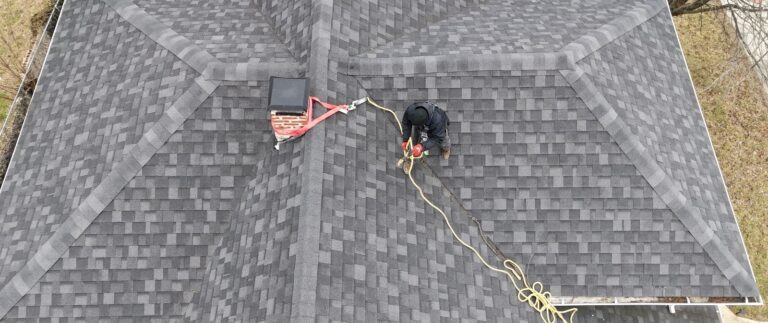
You might not realize it, but early spring is one of the busiest times for raccoons. As the weather warms up, they begin looking…
Read article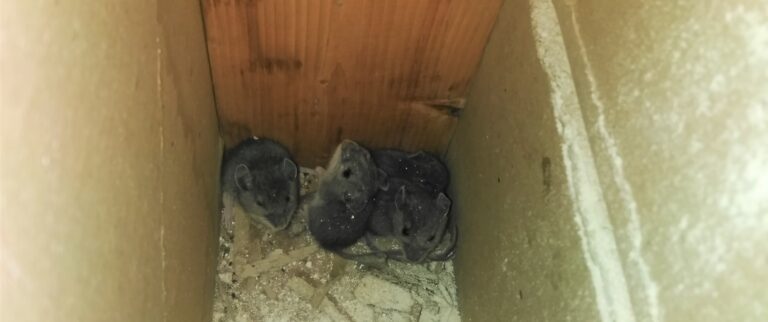
Winter is coming, and that means many RV owners are getting ready to put their vehicles away until spring. While storing your RV can…
Read article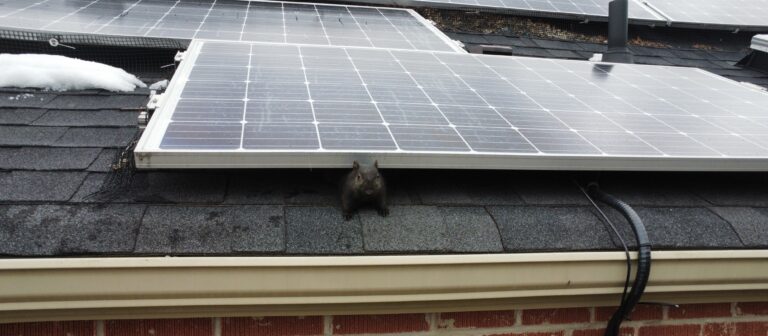
You might not think much about what’s happening around your roof in the colder months, but winter is actually one of the best times…
Read article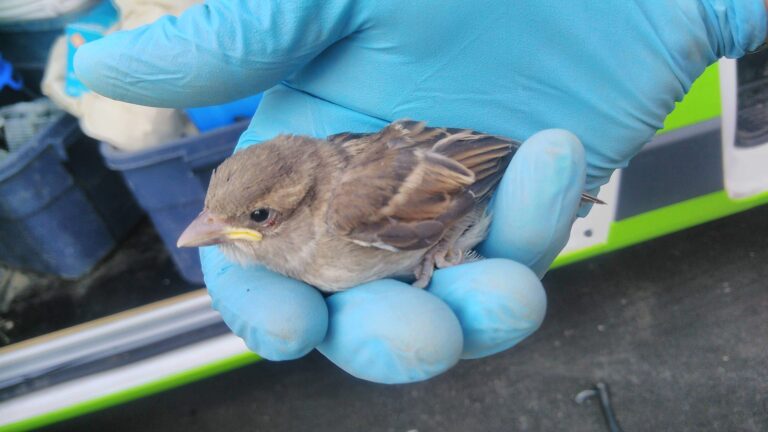
You might think a few sparrows in your home is no big deal. But once they start nesting in attics, vents, or wall spaces,…
Read article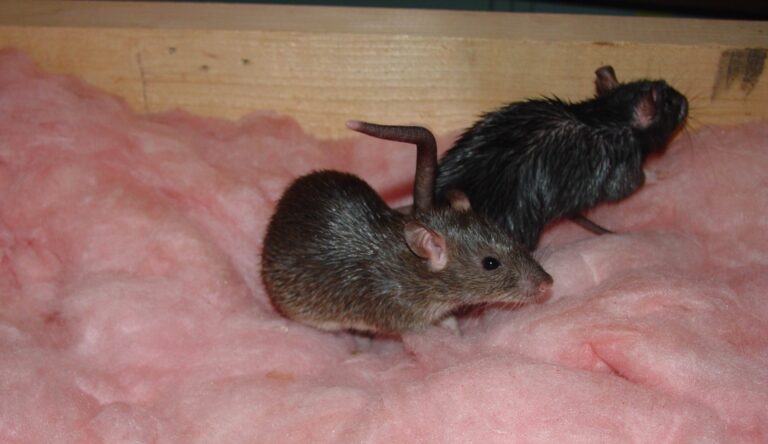
You probably expect winter to slow everything down, especially unwanted animals. But when the temperature drops, you may notice more scratching, chewing, and nighttime…
Read article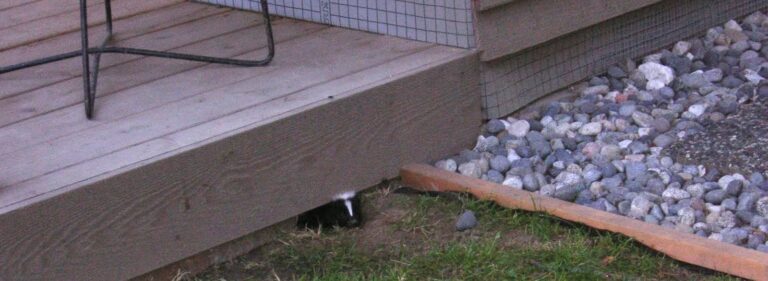
Walking through your Mississauga neighbourhood at dusk, you might notice a distinct black and white figure scurrying across your lawn or garden. The question…
Read article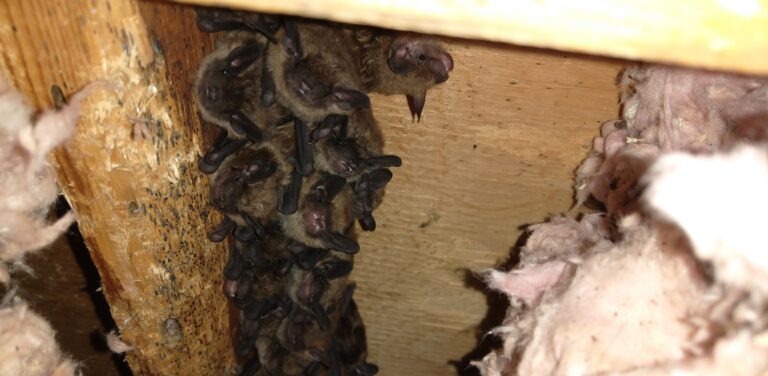
You probably don’t think about bats much during the winter, but they’re thinking about you. As spring approaches, bats begin looking for safe, warm…
Read articleRaccoons in a Port Credit chimney, starlings in a Meadowvale vent or mice coming in under a garage door in Erin Mills all start the same way with us. We find out what the animal is, choose a method that suits it, lift out any young by hand and seal every way in, then clean and restore the attic if it needs it. SPCAs and Humane Societies approve our humane methods, and each job carries a lifetime guarantee on all workmanship and materials.
 menu