Find what's drawing them in
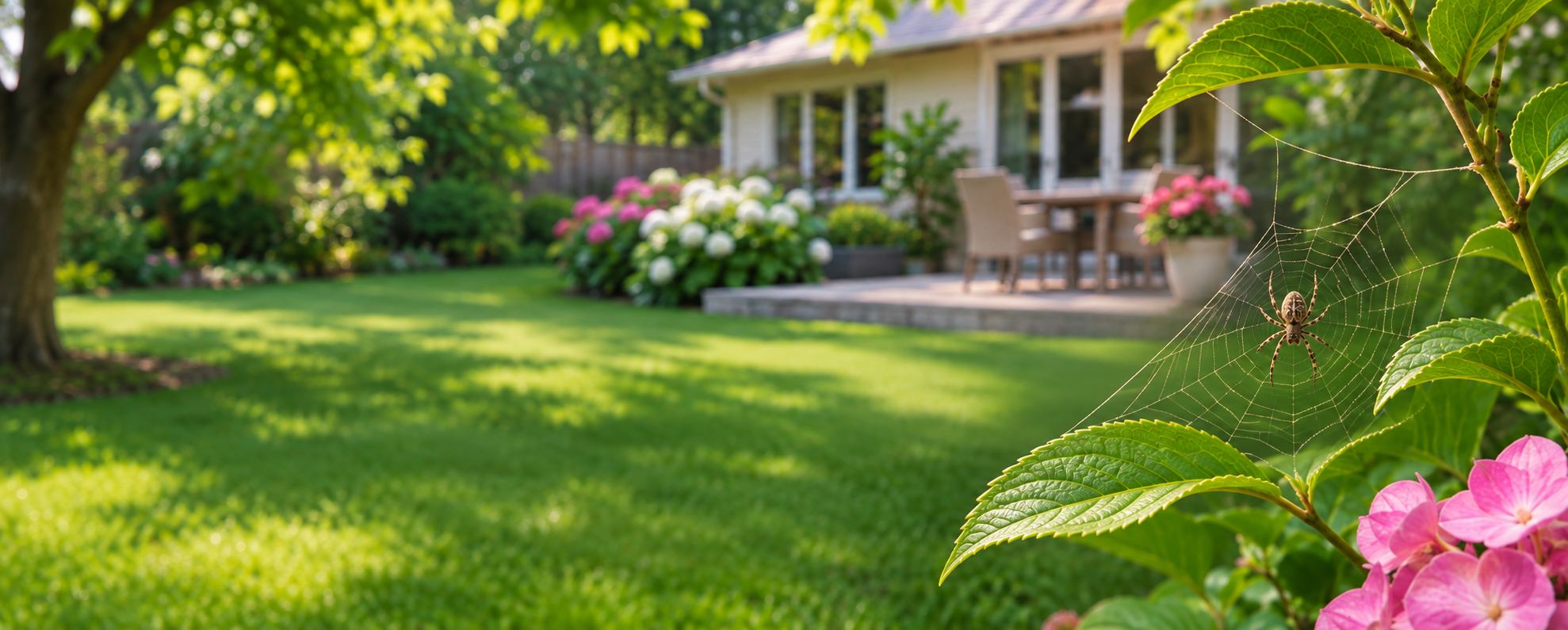
Webs in basements, garages, window wells and along rooflines usually point to the insects spiders are feeding on. We look at what's attracting those insects, not just at the webs.
GTA Spider Control
Contact Us



Cobwebs in the basement all winter? We'll find out what's keeping the spiders there.
Skedaddle GTA handles spider control for homes in Toronto and across the GTA, from Burlington to Oshawa and north to Newmarket. Webs in basements, garages, window wells and along rooflines usually mean insects are collecting there too, so we clear the webs and egg sacs, treat the spots where spiders shelter, and seal the gaps around windows, doors and utility lines that let them in. The same local GTA team looks after both pest control and wildlife removal.
Webs in basements, garages, window wells and along rooflines usually point to the insects spiders are feeding on. We look at what's attracting those insects, not just at the webs.
Brushing a web away leaves the egg sacs behind, and each one holds the next round of spiders. We remove webs and egg sacs from the areas where spiders are active.
We seal the gaps around windows, doors and utility lines that let spiders and their prey inside, so the house stops restocking itself.

The odd web is normal. When webs come back to the same window frames, ceiling corners or garage beams after you've cleared them, it points to an established population and a steady supply of insects.
Egg sacs are small, round silk cases tucked into webs, boxes, corners and the edges of window wells. Finding visible egg sacs means spiders are breeding in the house, not just passing through.
Some of the biggest spiders don't build webs at all. Wolf spiders hunt on the ground, so you'll see them dart across a basement or garage floor instead of waiting in a web.


Tell us where the webs are and how long you've been fighting them. We'll find what's drawing the spiders in before we recommend any treatment.
Toronto has far more spiders than most people realize. The City of Toronto's Spiders of Toronto guide lists 200 published species and says the real number is probably three or four times larger. Only a few of them live indoors. The common house spider settles into corners, basements and garages, the longbodied cellar spider prefers dark basements and the upper corners of rooms, and the barn funnel weaver likes damp cellars and laundry rooms.
Outside, orbweavers build across windows and around back door lights, and the same guide notes they're comfortable on a window 20 storeys up, which is why condo balconies collect webs too. Near the water, non-biting midges develop in the bottom of lakes, rivers and ponds, emerge in big swarms and gather around lights. Wherever insects pile up like that, spiders move in to feed on them.
Most of these spiders are more nuisance than threat. Health Canada says spiders don't transmit disease and rarely bite, and the Toronto guide notes that the vast majority of spiders sent in for identification are harmless to people.
Ontario's cosmetic pesticide ban limits the products allowed on lawns and gardens, but as the province's guide to pesticide classes explains, it permits products that control pests of buildings and structures. That's where our spider work happens: on and around the house itself.
We start by working out why the spiders picked your house.
Once we've looked inside and out, we explain what we found and what we recommend, and give you an itemized quote before any treatment begins.

We work out where spiders are concentrated and what's feeding them. Then we clear the webs and egg sacs and treat the cracks, corners and resting spots where they hide.

Outside, we take down the webs along the soffits, windows and doors and point out the conditions drawing insects to the house. Then we seal the gaps around windows, doors and utility lines.

We check that webs aren't rebuilding in the same spots. With fewer insects to eat and fewer ways in, spider numbers drop over time, and your quote lists any follow-up visits that are included.
How to handle spiders the right way, from the Skedaddle pest control team.
Our pest control team explains why spiders end up indoors, the role they play outside and the steps that help keep them out of your home.
| Season | What's happening | What we do |
|---|---|---|
| Winter | Outdoors, spiders shelter in cracks, under bark and in leaf litter, and some wait out the cold as eggs. Indoors, little changes: activity slows in cooler basements, but spiders survive as long as they don't freeze. | We clear indoor webs and egg sacs and point out the damp, cluttered spots they're using. |
| Spring | Spiders are among the first invertebrates to become active. By the end of April, large orbwebs appear around windows and back door lights, and fishing spiders sometimes wander from the ravines into backyards. | We clear new webs early and treat where spiders shelter around the house. |
| Summer | Summer is the peak time for spiders. Insects are active everywhere, and webs go up along rooflines, windows and decks. | We take down exterior webs and check entry gaps. |
| Late summer to first frost | As nights cool, wolf spiders look for warm places, and some species move into houses and garages looking for shelter. | We seal gaps around windows, doors and utility lines before the cold sets in. |
Spider activity shifts with the weather, not the calendar. If spiders are turning up inside, we'll take a look at any time of year.
Taking away the webs without the egg sacs only delays the problem. We remove both wherever spiders are active.
Product goes into the cracks, corners and resting spots where spiders shelter, not across your living space. Our formulations include borax and chrysanthemum flower extract.
Spiders follow insects. We show you the lights, damp areas and clutter that keep insects, and the spiders feeding on them, around your home.
We seal the openings around windows, doors and utility lines, and that sealing carries our lifetime guarantee on workmanship and materials.
Tell us what you're seeing and where. We'll find what's drawing the spiders, clear the webs and egg sacs, and put together a plan for your home.
Skedaddle GTA is one local team for pest control and wildlife removal, covering Toronto and the four regions around it. The GTA is good spider country. The City of Toronto's spider guide notes that most of the city's natural areas sit in the valleys and ravines that cross it, along the Lake Ontario shoreline and in Rouge Park, and every one of them feeds insects to the spiders living next door.
The lake shapes a lot of what we see. Condos at Harbourfront and Humber Bay and houses in the Beaches face the midge swarms that come off the water. Scarborough sits along 15 kilometres of bluffs, Pickering wraps around Frenchman's Bay, one of the large coastal wetlands on Lake Ontario's north shore, and Port Credit grew up at the mouth of the Credit River. Inland, older houses in the Annex and Cabbagetown have the cool, damp basements cellar spiders like. Garages in Markham, Ajax and Whitby collect cobwebs around their door lights, and homes near Newmarket's Fairy Lake sit beside 13.4 hectares of parkland, waterways and marsh.
We handle spiders in Toronto, North York, Scarborough, Mississauga, Oakville, Burlington, Markham, Newmarket, Pickering, Ajax, Whitby and Oshawa. If you're also hearing mice in the walls, one inspection can cover both, since insects and rodents often use the same gaps. When you call, tell us whether the webs are inside, outside or both, which rooms are worst, and whether you live near a ravine or the lake.
Curious about what spider control involves? These are the questions GTA homeowners ask us most.
Spider control is priced to the home, so there isn't one GTA-wide rate. Cobwebs in one corner of a Danforth basement are a smaller job than webbing along every soffit of a two-storey Oakville house that backs onto a ravine. We inspect first and give you an itemized quote before any treatment starts.
Venomous spiders are rare in Toronto and the rest of the GTA. The City of Toronto's spider guide says the northern black widow is native to Ontario but hasn't been reported within city limits, though it has been found in surrounding areas, sometimes in old sheds. The brown recluse has never been verified anywhere in Ontario. Health Canada notes that spiders don't transmit disease and rarely bite, so most of our spider calls are about webs and numbers, not bites.
Large spiders on the floor are usually hunters, not web builders. Wolf spiders hunt on the ground instead of spinning webs, and the City of Toronto's guide notes that fishing spiders, with leg spans of about 8 centimetres, sometimes leave the ravines for backyards and slip in through an open window or a crack under a door. Sealing those gaps is the long-term fix.
Webs keep returning when spiders still have food and shelter close by. Insects drawn to porch lights, windows or a damp basement give them a reason to rebuild in the same spot. We clear the webs and egg sacs, treat where the spiders hide and seal the gaps that let them and their prey inside.
Spider treatment is planned around your household, so mention children and pets when you book. Product goes into the cracks, corners and resting spots where spiders hide, not across open floors or furniture. Your technician will tell you which areas were treated and how long to keep children and pets away.
The most helpful thing is a quick note of where you've seen spiders, webs and egg sacs, and how long it's been going on. Leave the webs where they are until we've had a look, because they show us where activity is heaviest.
Our lifetime guarantee covers the workmanship and materials we use to seal your home, and every entry point we seal carries it. The guarantee covers the sealing, not a spider-free house, and any follow-up treatment visits are listed in your quote.
Skedaddle GTA serves Toronto, North York and Scarborough; Mississauga in Peel Region; Oakville and Burlington in Halton Region; Markham and Newmarket in York Region; and Pickering, Ajax, Whitby and Oshawa in Durham Region. Give us a call at (855) 878-7859 with your address and we'll confirm you're in our service area.
Tell us where the webs are building up. Our GTA team will find what's feeding the spiders, clear them out and seal the gaps they're using.
 menu