Find the water
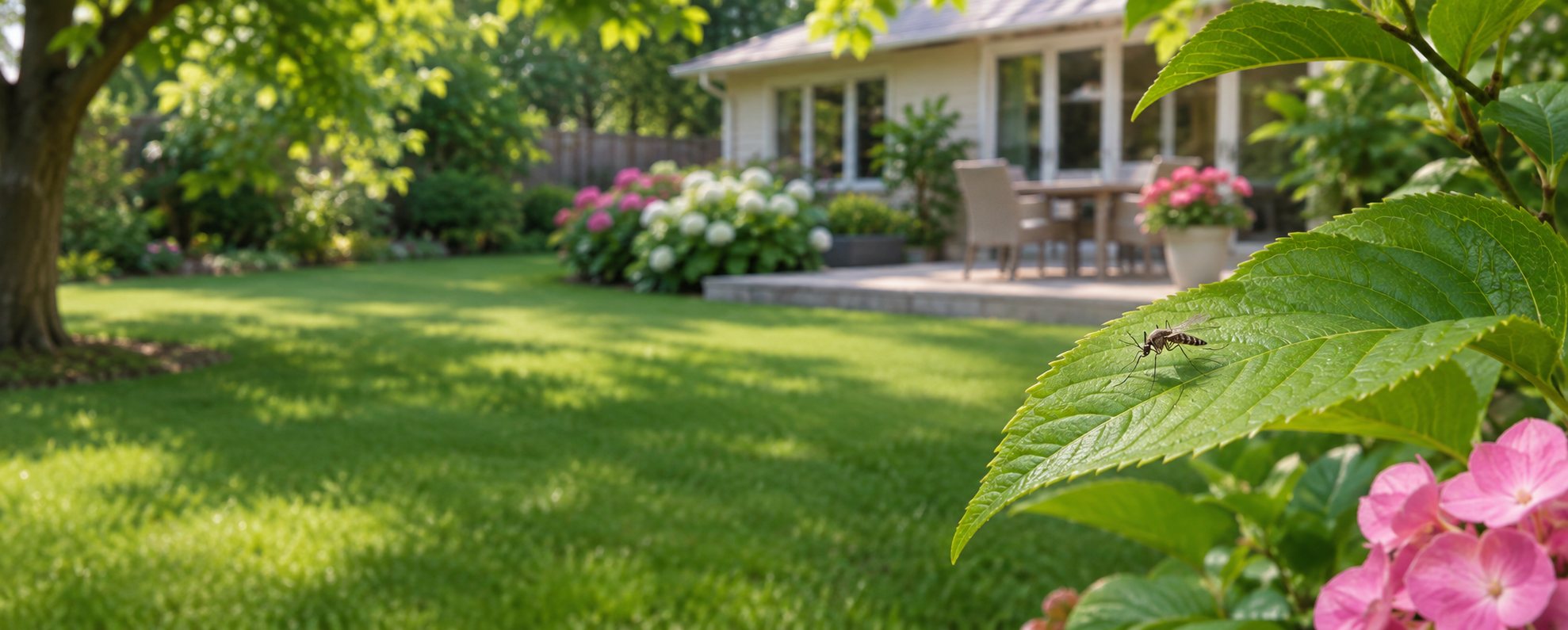
Mosquitoes need standing water to breed. Around GTA homes, that's usually clogged eavestroughs, birdbaths, planters and old tires. We look for those first.
GTA Mosquito Control
Contact Us
Getting eaten alive on the patio? We track down where the mosquitoes are coming from.
Skedaddle GTA provides backyard mosquito control for homes in Toronto and across the GTA, from Burlington to Oshawa and north to Newmarket. Most of the mosquitoes biting you hatched in standing water close by and spend the day resting in shade, so that's where we start. We treat the resting areas and show you which water to clear, because removing the breeding water does more than spraying the adults you can see. The same local GTA team handles our pest control and wildlife work.
Mosquitoes need standing water to breed. Around GTA homes, that's usually clogged eavestroughs, birdbaths, planters and old tires. We look for those first.
By day, adult mosquitoes rest in shade under decks and in dense shrubs. That's where our treatment goes, rather than over the whole lawn.
Removing the water they hatch from does more than spraying the adults you can see. We point out each breeding spot and tell you how to clear it.
A blocked eavestrough, a forgotten bucket, a pool cover or a dip in the lawn can all turn into a nursery. As Peel Public Health's 2026 update puts it, water that sits stagnant for more than seven days is an ideal breeding site.
Mosquitoes wait out the heat of the day somewhere cool and sheltered. If walking past the hedge or under the deck sets off a swarm, you've likely found a resting spot.
Mosquitoes are most active at dawn and dusk. When a barbecue on the deck turns into a slapping contest every night, there's usually breeding water or a resting spot nearby.


Tell us when the biting starts and which part of the yard is worst. We'll find out where the mosquitoes are breeding and resting before we recommend any treatment.
Most of the mosquitoes biting you in the backyard didn't come far. Toronto Public Health's surveillance, described on the City's catch basin larviciding page, has identified storm water catch basins as significant breeding sites for the Culex mosquito, and the City notes that clogged gutters collect water that mosquitoes breed in. A mosquito can go from egg to adult in as little as a week, so a planter saucer that fills in a summer storm can produce a fresh batch before you notice.
West Nile virus turned up in every part of the GTA in 2026. Halton found its first positive batch in Oakville at the start of July and finished the season with 35 positive mosquito pools, 16 each in Burlington and Oakville. York Region's first positives came from two Markham traps. Toronto Public Health confirmed the city's first positive mosquitoes on 17 July and reported its first human case of 2026 on 30 July. In Durham Region, 15 trap sites caught more than 32,000 mosquitoes between June and mid-September, and 42 of the pools tested positive, according to Durham's adult mosquito surveillance results. Our work lowers the number of mosquitoes in your yard. For health advice, follow your local public health unit.
Local health units do some mosquito work of their own, mostly in the catch basins along public roads. That still leaves plenty of water close to your house: eavestroughs, planter saucers, tarps, low spots in the lawn and the shady corners where adults wait out the day. That's the part of the problem we take care of.
Ontario's cosmetic pesticide ban makes an exception for public health and safety, which covers insects that bite or carry disease. Mosquitoes qualify, so treating them around your home is allowed.
We start by working out why your yard has mosquitoes, not just how many.
Once we've walked the yard, we explain what we found, what we recommend and what it will cost, before any treatment starts.

We pinpoint the breeding water and resting areas on your property, then treat the shady spots where adults gather. That way we're working on where the mosquitoes come from, not only the ones in the air.

Clearing breeding water is the other half of the job. We show you what to empty, cover or fix, from clogged eavestroughs to overgrown shrubs, so fewer mosquitoes hatch in the first place.

Every summer storm refills something, and new mosquitoes hatch all season. Follow-up treatments keep the resting areas in check, and your quote lists any visits that are included.
Why do-it-yourself pest control rarely works, from the Skedaddle pest control team.
Skedaddle technician Corey explains why most store-bought pest control products are fairly ineffective and why treating pests yourself only gives a temporary fix.
| Season | What's happening | What we do |
|---|---|---|
| Winter | Biting stops in the cold. Some Culex females survive the winter in sheltered places such as cellars, sewers and animal burrows, ready to come out in spring. | We point out drainage fixes to make before the thaw, from eavestroughs to low spots in the lawn. |
| Spring | Mosquitoes become active once temperatures stay above 10 °C, usually in mid to late April. | We check the yard for breeding water before numbers climb. |
| Early summer | Numbers peak in June and July, especially in hot, humid stretches. Health units begin weekly trapping in mid-June. | We treat resting areas and help you clear standing water. |
| Late summer | West Nile virus activity builds, and GTA health units keep testing mosquitoes into September. Activity tapers off in late September and early October and ends with the first hard frost. | We keep resting areas treated and look for new standing water after storms. |
Mosquitoes don't keep to a strict calendar. A warm, wet spell can bring them out sooner or keep them biting longer.
Product goes on the shrubs, hedges, deck undersides and shady beds where adult mosquitoes rest, not across the whole yard.
We check every place water sits for days, from eavestroughs and downspouts to pool covers, saucers and dips in the lawn.
We tell you what to drain, cover or change. Getting rid of breeding water cuts mosquito numbers more than spraying adults alone.
New mosquitoes keep hatching until the season ends. Follow-up treatments keep the resting areas under control, and your quote lists the visits included.
Tell us what's happening in your yard. We'll track down the breeding water and resting areas and give you a plan for the season.
Skedaddle GTA is one local team for pest control and wildlife removal, working across Toronto and four surrounding regions. Few cities give mosquitoes as much cover as this one. Toronto's ravine system runs more than 300 kilometres and covers 17 per cent of the city, and Rouge National Urban Park stretches through Scarborough, Markham and Pickering.
Each part of the GTA has its own wet spots. In Toronto, homes in Riverdale, Leaside and Bloor West Village sit above the Don and Humber valleys, while North York and Scarborough streets back onto creek ravines. Along the lake, Mississauga has Rattray Marsh, Oakville has Bronte Creek, and in Durham, Whitby's Lynde Shores and Oshawa's 137-hectare Second Marsh hold water all summer. Ajax runs between Duffins and Carruthers creeks. Up in York Region, Unionville sits beside Toogood Pond, and many newer Newmarket streets back onto stormwater ponds. We don't treat public marshes, ravines or ponds, so our work stays on your property: the shady corners where mosquitoes rest and the eavestroughs, containers and low spots where they breed.
We treat mosquitoes in Toronto, North York, Scarborough, Mississauga, Oakville, Burlington, Markham, Newmarket, Pickering, Ajax, Whitby and Oshawa. If raccoons or mice are also giving you trouble, one inspection can cover both. When you call, tell us what time of day the biting is worst, which part of the yard is worst, and whether you have a pond, pool or rain barrel.
Wondering what mosquito control involves? These are the questions GTA homeowners ask us most.
Mosquito control is priced to the property, so there's no flat rate for the GTA. A compact Leslieville backyard takes less work than a deep Oakville lot that backs onto a ravine, and the amount of shrubbery, the standing water we find and the number of visits the season needs all play a part. We look at the yard first and walk you through the recommended work and its price before anything is treated.
Mosquito treatment can't promise protection from West Nile virus. What it does is cut down the mosquitoes in your own yard, by treating the places they rest and helping you get rid of the water they breed in. For personal protection, follow the advice of your local public health unit: Toronto Public Health's West Nile advice, Durham Region Health Department advice, York Region Public Health advice, Peel Public Health mosquito advice or Halton Region Public Health advice.
A store-bought spray only reaches the mosquitoes that are flying when you use it. The water they hatch from is still there, and a mosquito can go from egg to adult in as little as a week, so a fresh batch is out within days. Lasting results come from treating where adults rest and clearing the breeding water at the same time.
The most useful thing is to tell us about the yard when you book: any pond, pool, hot tub, rain barrel or vegetable garden, and where the family and pets spend time outside. Plan to keep pets inside while we work. Your technician will mention anything else to take care of before the treatment starts.
Your family and pets are part of how we plan the treatment, so tell us about them when you book. Product goes on the shady shrubs and undergrowth where mosquitoes rest, not over the lawn where children play. Before we leave, your technician will show you what was treated and how long to keep kids and pets away from those areas.
Mosquito treatments are permitted in Ontario. As the province's guide to pesticide classes explains, the cosmetic pesticide ban has a public health and safety exception for animals and insects that bite, sting or carry disease, and that exception covers mosquitoes.
A mosquito-free yard isn't something any company can realistically guarantee, because mosquitoes fly in from next door, nearby parks, ravines and stormwater ponds. Our lifetime guarantee covers the sealing work we do on homes, and mosquito treatment doesn't involve sealing, so that guarantee doesn't apply here. Your quote sets out any follow-up treatments included with the service.
Our GTA team covers Toronto, North York and Scarborough; Pickering, Ajax, Whitby and Oshawa in Durham Region; Markham and Newmarket in York Region; Mississauga in Peel Region; and Oakville and Burlington in Halton Region. Call (855) 878-7859 with your address and we'll confirm your street is on our route.
Tell us what's going on and where. Our GTA team will find the breeding water, treat the spots where mosquitoes rest and show you how to keep the next batch from hatching.
 menu