




Wasp and hornet control
Hornet and wasp nests tucked under soffits, inside sheds and wall voids, or dug into the ground beside paths.
Wasp and hornet control in the GTA →Skedaddle GTA — humane wildlife control for Whitby and Brooklin in Durham Region.
No traps. No poison. Permanent exclusion.
From Port Whitby and the Lynde Shores marshes up past Highway 407 to Brooklin, Whitby homeowners in Durham Region rely on Skedaddle Humane Wildlife Control when mice, raccoons, squirrels or bats move in. Our technicians inspect the whole house first, pick a removal method that fits the animal, carry out any dependent young by hand and close each opening with durable materials. Through the winter months, much of our Whitby work is sealing the small gaps that let mice and squirrels in from the cold.
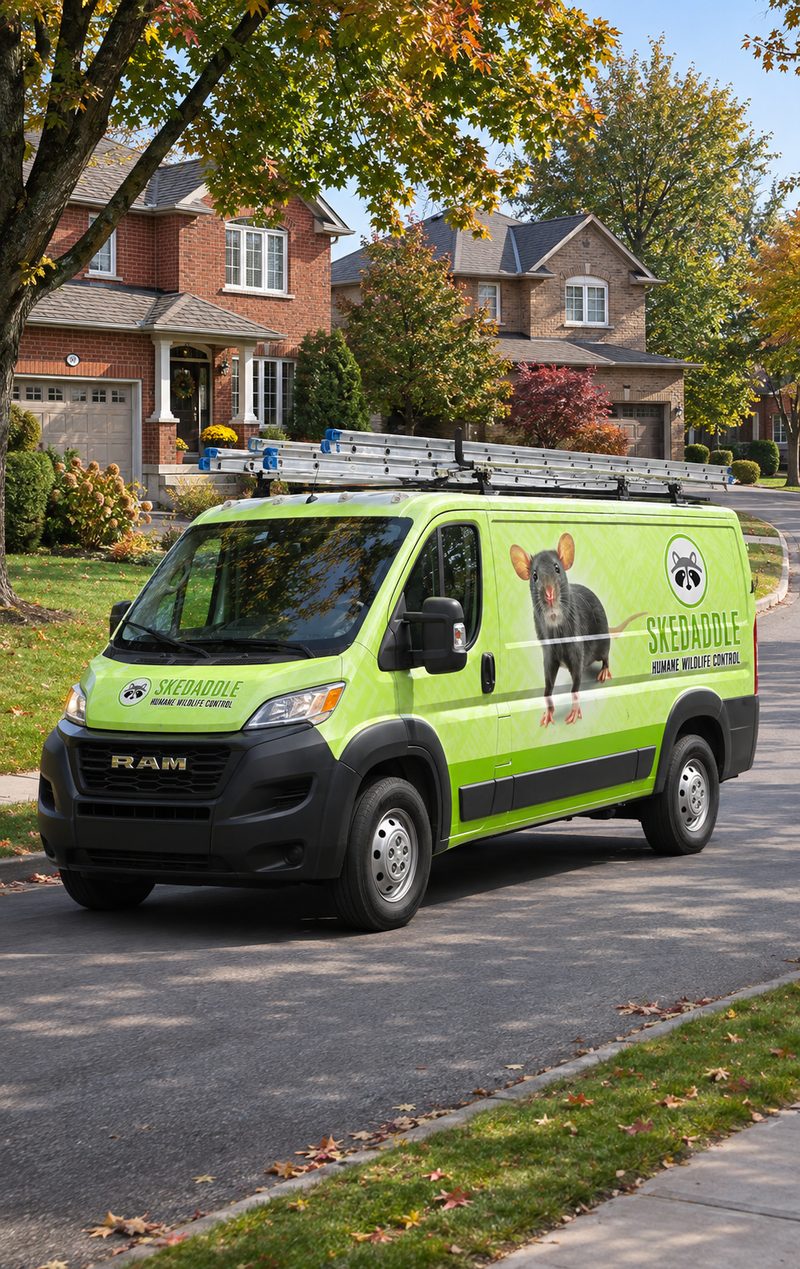
A typical Whitby call begins with scratching overhead or droppings along a garage wall. People want three things from us: a humane removal, a seal that holds and a written price before we start. Here is how we deliver each one.
Plenty of Whitby's wild space sits right beside its streets. Down by the lake, Lynde Shores Conservation Area covers 272 hectares and shelters both the Lynde Creek and Cranberry marshes. Further north, near Brooklin, the Lynde Creek valley winds through the 284-hectare Heber Down Conservation Area. Raccoons, skunks and squirrels use these green corridors as highways into backyards. Our GTA crews finished more than 950 wildlife and pest jobs in Whitby over the past 12 months, everywhere from Port Whitby to Brooklin.
Each Skedaddle technician learns written procedures for working safely on roofs, entering attics and excluding each species, and SPCAs and Humane Societies approve the humane methods we use. Our work follows Ontario's rules on wild animals damaging property, which include releasing any live-captured animal within one kilometre. In Whitby this is especially relevant: Whitby Animal Services does not trap or relocate nuisance wildlife, which leaves removal and sealing to a qualified private company.
Taking the animal out deals with the immediate problem, but only a proper seal keeps it from returning. That's why every opening we close is covered by a lifetime guarantee on all workmanship and materials, and why we come back to repair any sealed spot that fails, free of charge. Before we price anything, the inspection logs every gap on the house, chimney flashing and sill plate included. Whether your home is a century house close to downtown or a newer build in Brooklin, the guarantee is the same.

General Manager
Tisha has been General Manager of Skedaddle's Toronto and Durham Region locations since September 2017. Before that, she managed lawn care locations in Ontario and British Columbia, and it was Skedaddle's focus on safety, humane treatment of wildlife and customer service that convinced her to switch industries. She's proud to give homeowners solutions that last, and she enjoys how unpredictable wildlife work can be.

Field Supervisor
A Fleming College Fish & Wildlife graduate, Colin trains and mentors Skedaddle's new staff and enjoys teaching the public about urban wildlife. He likes being outdoors and working hands-on with animals. Outside work, he volunteers as a Scout Leader with the 1st Newcastle troop in Clarington, a short drive east of Whitby in Durham Region.

Wildlife Specialist
After earning his Seneca College diploma in Law and Public Safety, Harley chose Skedaddle because it takes customer service seriously. He is devoted to his family and community and is a regular volunteer with Fellowship Pickering Children's Ministries. His free time goes to his wife and to woodworking, a hobby he loves.

Wildlife Technician
Working at Skedaddle brings together Chris's fondness for animals and his knack for fixing things. Given the choice, he'd take a raccoon job over any other, especially one involving babies. Off duty, he spends his time with his family and his five kids.
In this video, one of our technicians walks through a Durham Region garage, shows the small openings mice squeeze through and explains how we close them permanently.

In Whitby, mice, raccoons, squirrels and bats keep us busiest. Older neighbourhoods such as Pringle Creek and Rolling Acres have mature trees that reach right over rooflines, while building in Brooklin keeps unsettling the fields and hedgerows mice call home. Below, you'll find how each animal gets inside and how we remove it humanely. Timing by season is covered in the Whitby wildlife by season chart further down.
No wildlife call comes in more often in Whitby than mice, and house mice that get indoors can keep breeding year-round. The Town's Property Standards By-law says homes must be kept free of rodents and that unprotected exterior openings need wire mesh or a metal grille, which is how we work anyway. We follow every gap at the sill plate, around utility lines and in the garage, seal each one and then clear out droppings and nesting material.
A raccoon in a Whitby attic, chimney or roof void may be a mother with kits, so nothing gets closed until we've checked for young. After that, we repair the chimney cap, roof vent or soffit corner it used, with materials a raccoon can't rip open. Feeding wildlife is also banned under Whitby's Public Nuisance By-law, so it helps to keep pet food, compost and green bins locked down.
Because grey squirrels stay active all year rather than hibernating, one can turn up in a Whitby attic in any month, and the noise may be a female setting up to raise a litter. We locate where she's getting in, whether a soffit, gable vent or roof edge, check for young and close the gap with heavy-gauge material that squirrels can't chew.
Bats usually roost in attics and wall voids, and timing is more important with them than with any other animal we handle. The Ontario MNR bat exclusion guide explains when it's humane to seal a building, since closing it up while bats are inside can trap them. Our first step is confirming whether any bats are there. If they are, the exclusion follows that guidance, with one-way doors where they suit the roost.
The rest of our Whitby wildlife work is skunks, birds and rats. For skunk removal, we bury a screen barrier along decks, porches and sheds once we're sure the den is empty. Bird removal is usually starlings or sparrows nesting in dryer or bathroom vents, which we clear out and screen over. Rat removal begins at ground level by sealing the foundation and keeping garbage in rodent-proof storage, which the Town's by-law also calls for.
Each sound tells us something: scratching around dawn, heavy thumps at night or a soft squeak from inside a wall usually means a different animal. We'll inspect your Whitby home, tell you what's living there, show you how it's getting in and give you a written plan before any work begins.
Whitby is one of the eight local area municipalities in Durham Region, and we cover it end to end, from the Lake Ontario shoreline through Brooklin to the rural north. The list below uses the neighbourhood names residents use, not official boundaries, so we'll confirm your address when you book. Call us if your area isn't listed and we'll check for you.
When we inspect a Whitby home, we go over the whole property, inside and outside, and leave you with a written plan and price. The technician confirms the animal, tracks down every way in from the roof peak down to the foundation and talks you through the work first. The visit goes like this:
Since restoration and exclusion are priced together on one written quote, you can see the entire job before saying yes. Call (905) 213-5363 or book online to arrange your inspection.

Our technician inspects your Whitby home from top to bottom to identify the animal, pinpoint how it's getting in and see which parts of the attic, walls or crawl spaces it's using. Then we choose a humane removal method that suits the species and the timing, and we always check for dependent young first. We only use one-way devices when the situation calls for them, never automatically.
Learn more
With the animals out, we look at what contamination they've left and settle the cleanup scope with you. That might cover removing droppings, nesting and soiled insulation, decontaminating the space and putting back attic insulation that was damaged. A lot of homes only need targeted cleanup, so your quote includes only the work your home requires.
Learn more
After confirming the animals have left, we seal each confirmed and potential entry point using durable materials picked for the species, such as chimney caps, roof-vent screening and foundation barriers. A lifetime guarantee on all workmanship and materials backs this exclusion work.
Learn moreWhitby's spot on the Lake Ontario shore brings cold, snowy winters and warm summers. Here's what local wildlife tends to do in each season and how that shapes our schedule. The chart shows planning priorities, not call counts.
| Season | Wildlife focus | Our service focus |
|---|---|---|
| Winter (December–February) |
Mice and rats moving indoors; grey squirrels mating and nesting in attics; raccoons denning, with mating getting under way; skunks tucked into dens; some big brown bats hibernating inside buildings | Find and close rodent entry points; seal soffits and gable vents ahead of squirrel litters; make sure no bats are left before a complete seal |
| Spring (March–May) |
Raccoon kits and squirrel litters in chimneys and attics; skunks raising young under decks and sheds; bats coming back to their roosts | Lift young out by hand and give mothers the chance to move them; bat exclusion April to early May, with one-way doors where appropriate; seal dens after they empty |
| Summer (June–August) |
Bat maternity period, mid-May to mid-August; second squirrel litters; young raccoons and skunks roaming | Bat exclusion paused until pups can fly; screen barriers for decks and sheds; vent covers |
Quarterly focus: Winter (December 2026–February 2027)
In Whitby this winter, we're focused on keeping mice outside and getting rooflines closed before squirrels have their first litters in February. That work includes tracking mouse entry at foundations, garages and utility lines, sealing soffits and gable vents and fitting chimney caps before raccoon mating starts. Every roof void is checked for bats before we seal it, because the Ontario MNR bat exclusion guide advises against sealing entrances completely while any bats remain.
From mice in a Brooklin garage to a raccoon under a Port Whitby porch, the same four commitments shape every job we do in Whitby. The animal in front of us changes our methods, but never these standards.
We pick the method once we've seen the house, not beforehand. Depending on the animal and the opening, that could be one-way exclusion doors where appropriate, retrieving young by hand, exclusion hardware built for that species on vents and chimneys, or planning the work around a maternity window. Bats need this care the most, because the provincial timing guidance decides when their exclusion can happen.
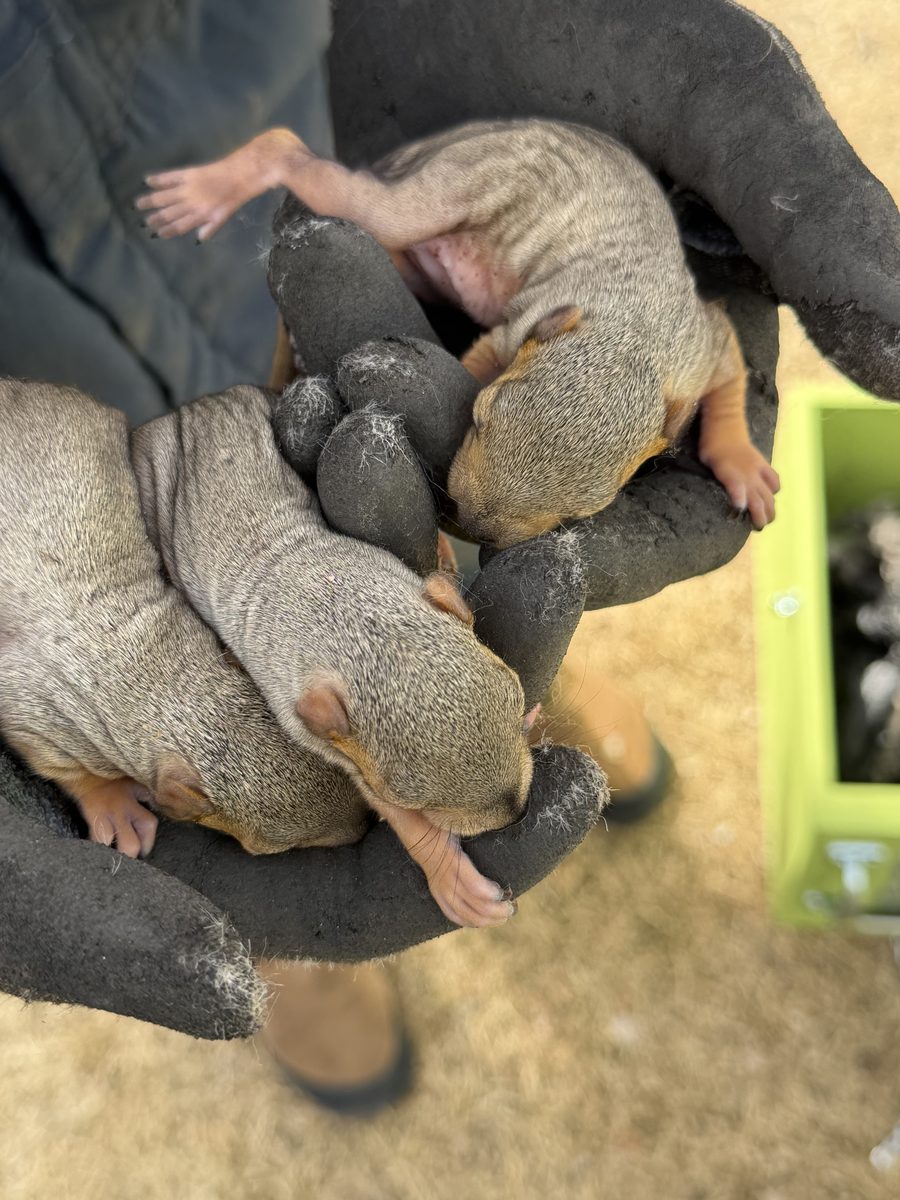
The attics, chimneys and decks we're asked to seal are often where squirrels, raccoons and skunks are raising young. If babies are there, we lift them out by hand and set them in a heated reunion box beside the entry, giving the mother a chance to carry them to a new den. Only after the family has moved on do we close the opening, so no young are sealed in and the mother isn't driven to tear through your roof to get back.
In a Whitby attic, mice and squirrels leave droppings, urine and torn insulation, and months of use can crush insulation over a wide area. We take out what's contaminated, decontaminate the space and replace insulation where it's needed, so the attic keeps your home warm again. You'll see the scope on your quote before we begin.
Under Ontario rules, wildlife we remove has to be released within a kilometre of your home, which makes the seal the real barrier. We close each entry point with durable, species-appropriate materials, from heavy-gauge roof-vent screening to barriers buried under decks. That work is covered by a lifetime guarantee on all workmanship and materials, and we'll come back to repair any sealed opening that fails.
WHITBY · PEST CONTROL
Our Whitby wildlife crew also handles pest control, using eco-friendly products and carefully sealing the cracks and gaps insects crawl through. If you'd like ongoing protection, the Four Seasons Pest Control program books four visits a year, each one targeting that season's pests. Businesses in downtown Whitby and Brooklin, from restaurants to plazas and offices, can also get a custom commercial pest control plan focused on their busiest areas. We treat:
Hornet and wasp nests tucked under soffits, inside sheds and wall voids, or dug into the ground beside paths.
Wasp and hornet control in the GTA →
Carpenter ants working into damp wood or window frames, and pavement ants marching in from the yard.
Ant control in the GTA →
Itchy bites, small spots on the mattress, or signs that showed up after a trip or a second-hand furniture find.
Bed bug control in the GTA →
Roaches in kitchens and bathrooms, or moving through shared walls in apartments and rental units.
Cockroach control in the GTA →
Webs collecting in basements, garages and window wells, wherever the insects spiders eat gather.
Spider control in the GTA →
Treatments around the yard that go after standing water and shaded breeding spots near decks and gardens.
Mosquito control in the GTA →

Wildlife removal in Whitby isn't sold at a flat rate, since the price depends on the animal, how many entry points need sealing, which materials the job calls for and whether you need cleanup or new insulation. After inspecting your home, we hand you an itemized written quote on the spot, so the full scope and price are clear before you agree to anything.
We can sometimes come out the same day, though we can't promise it. Real emergencies get priority, like a raccoon that has broken through a ceiling into your living space or a bat loose in the house. Other calls are booked into the next open inspection slot, which is still the quickest way to a sealed home. Phone (905) 213-5363 to ask about today's openings.
A bat inspection can be booked whenever you like, but when the exclusion happens depends on whether bats are still roosting inside. We work to the Ontario MNR bat exclusion guide, which explains when a building may be sealed completely and rules out exclusion while flightless pups are present. After we confirm whether your home has a roost, we book the exclusion into the next window the guide permits, and the Whitby wildlife by season chart on this page shows when those windows usually are.
Our Whitby coverage runs from Port Whitby and Lynde Creek by the lake, through Downtown Whitby, Pringle Creek and Blue Grass Meadows, up to Rolling Acres, Williamsburg, Taunton North and Brooklin. The same GTA team works across the rest of Durham Region too, including Oshawa, Ajax and Pickering. Give us your address and we'll confirm we cover it.
Ontario's wildlife rules apply to every job we do. The Fish and Wildlife Conservation Act sets out how wildlife may be handled, and provincial rules say live-captured animals must be released within one kilometre of where they were caught. Bat exclusion timing follows the MNR guide, and SPCAs and Humane Societies approve our humane methods. In Whitby, Animal Services doesn't trap or relocate nuisance wildlife, so homeowners rely on a qualified private service for removal.
Mice make up more of our Whitby wildlife work than any other animal, with raccoons, squirrels and bats next in line. Mice get in through gaps around foundations and utility lines, raccoons den in chimneys and attics, squirrels nest in soffits and roof voids, and bats roost in attics and wall cavities. Skunks, birds and rats account for the rest of what we remove in Whitby.
Our work in Whitby is backed by a lifetime guarantee on all workmanship and materials. Should any entry point we sealed fail, we'll return and fix it at no cost. Since the guarantee depends on the seal, we record every opening on your house, roof peak to foundation, during the inspection and before quoting.
After the animals have gone, we look over the attic and deal with whatever they've left. Depending on the damage, that might mean clearing droppings, urine and nesting, decontaminating the area and replacing insulation that's soiled or compressed. Many attics don't need a full restoration, so the cleanup is laid out on the same written quote as the exclusion before any work starts.
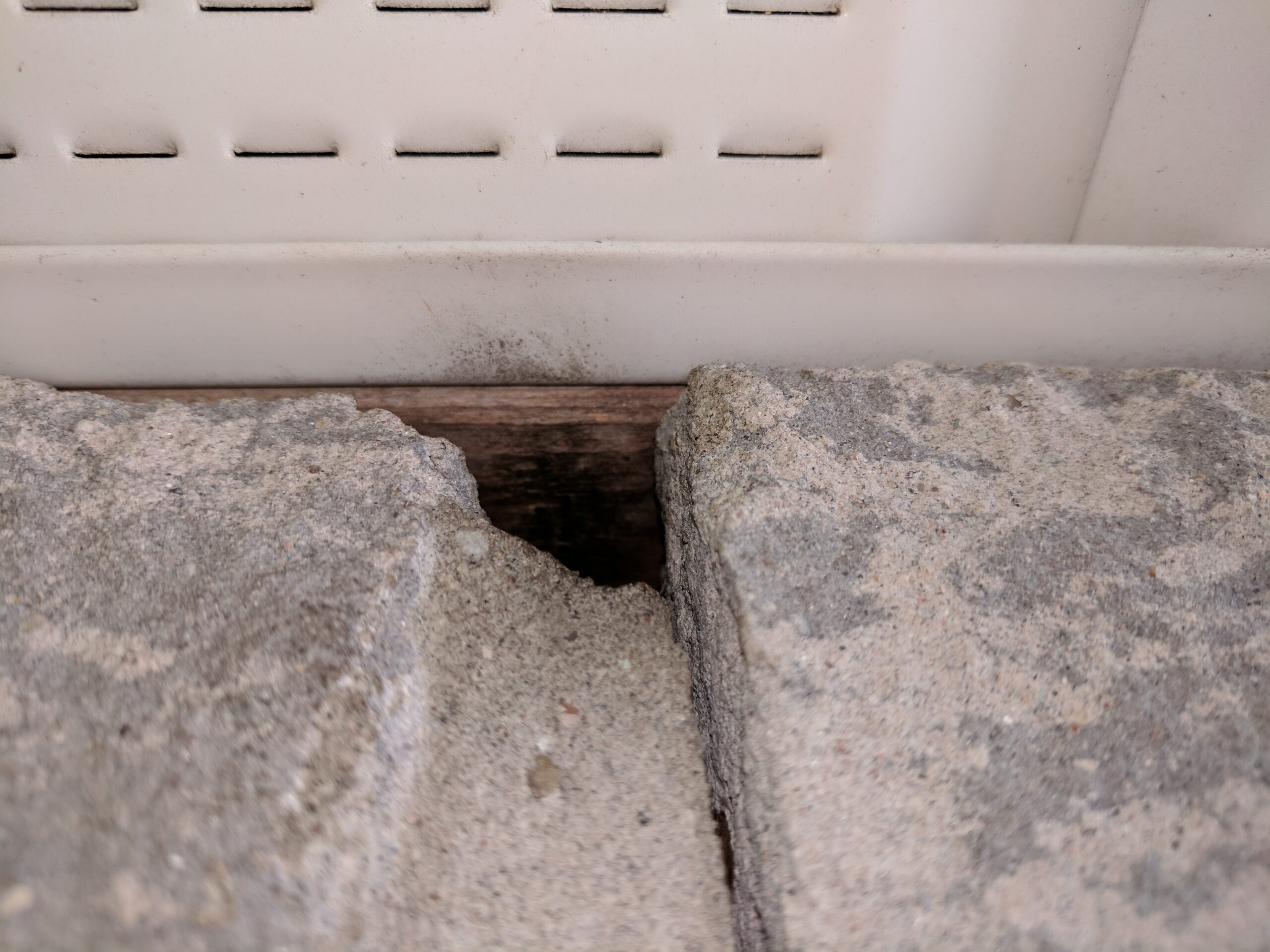
Droppings in more than one room, gnawing in several spots and noises at different times of day can all point to more than one mouse. Here is how to tell.
Read article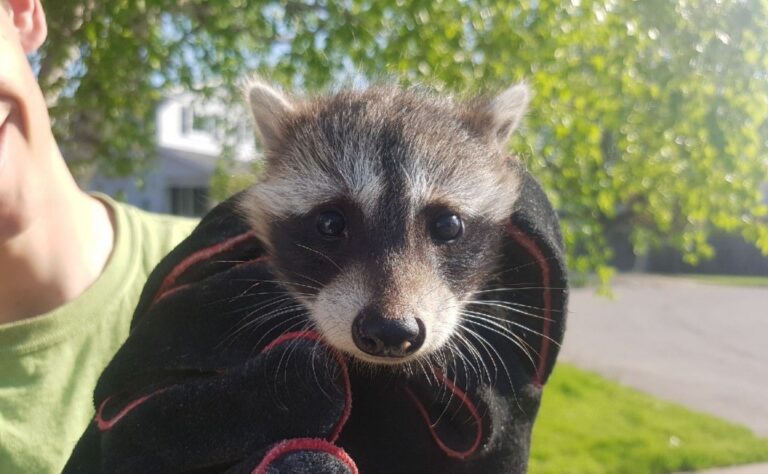
You hear thumping above the ceiling every night. You notice a gap along the soffit that was not there before spring. You find droppings…
Read article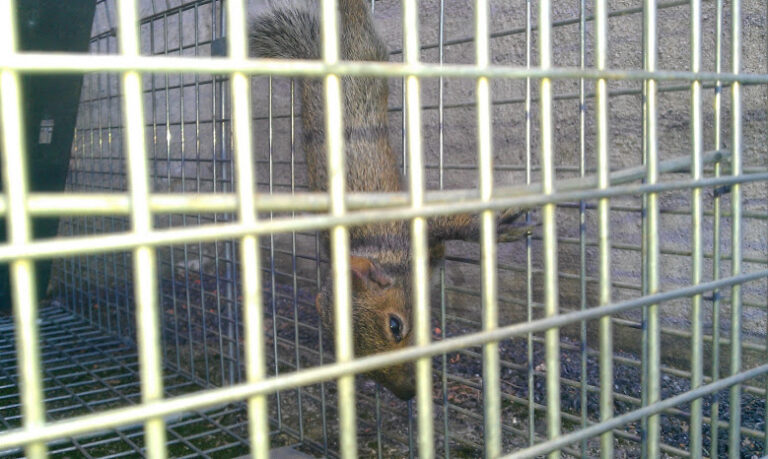
Trapping a squirrel and driving it away rarely solves the problem. Learn why relocation fails and how humane exclusion keeps squirrels out of your attic for good.
Read article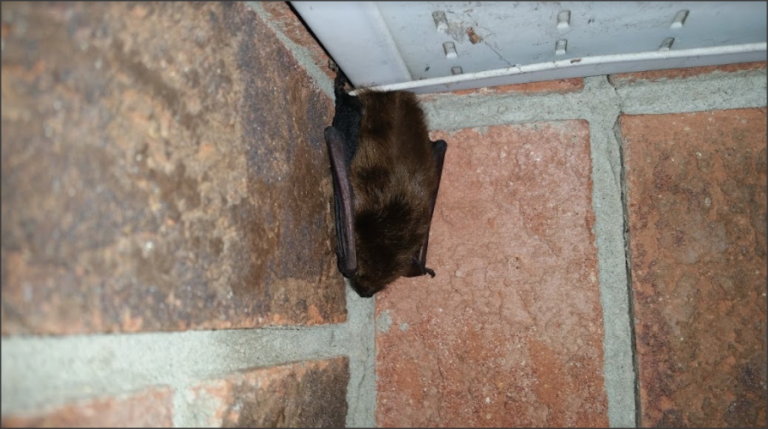
Hanging upside down lets a bat drop straight into flight. Our Whitby team explains how this roosting habit helps bats survive.
Read article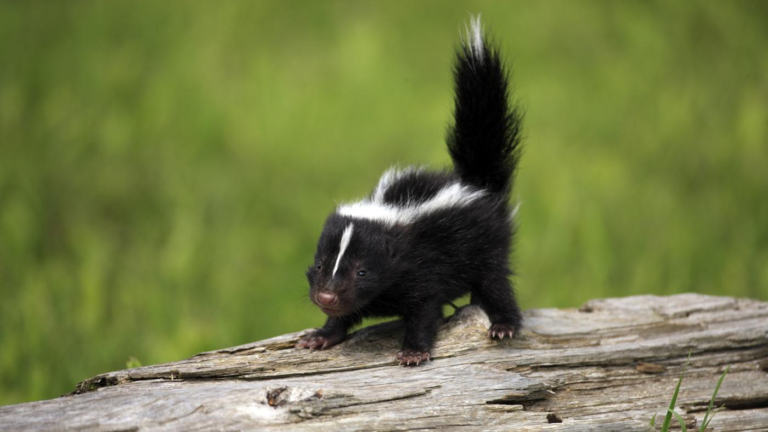
Baby skunks can spray within weeks of birth, though their aim is erratic at first. Here is what that means for a skunk family under your deck.
Read article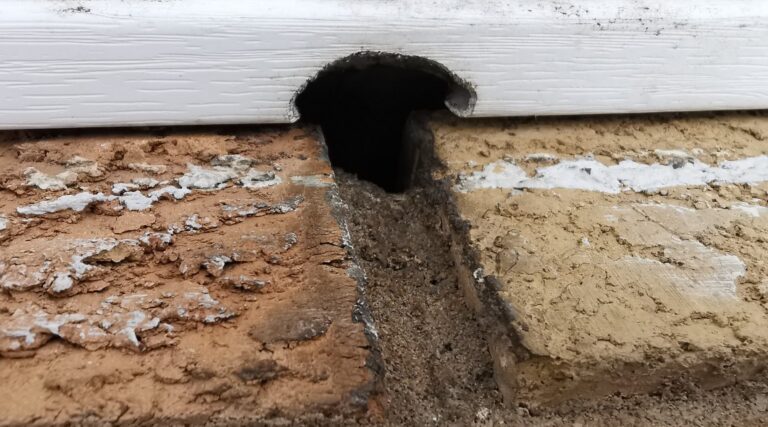
Rats and mice see poorly by human standards but rely on smell, touch and hearing. Knowing how they sense the world helps when keeping them out.
Read articleMaybe it's mice in a Brooklin garage, a raccoon in a chimney near Lynde Shores or a squirrel chewing at a Pringle Creek soffit. Whatever the sound, we tackle it the same way: identify the animal, pick a method suited to it, lift out any young by hand, seal every entry point and then clean and restore the attic if it needs it. SPCAs and Humane Societies approve our humane methods, and every job carries a lifetime guarantee on all workmanship and materials.
 menu