Name the ant first
Carpenter ants tunnelling into a damp porch beam and odorous house ants raiding the pantry are two different jobs. Our technicians identify the species from its appearance, location and behaviour, and that decides the plan.
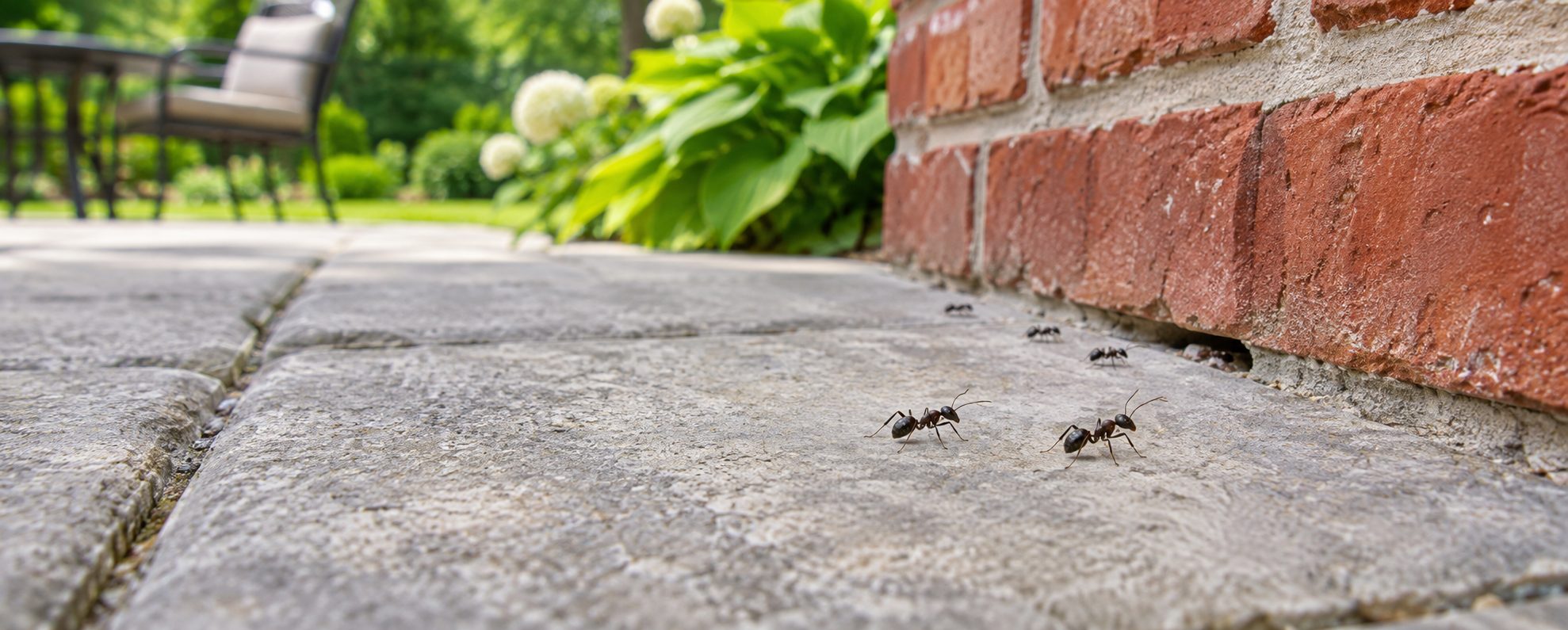
GTA Ant Control
Contact Us


Big black ants on the kitchen floor in the middle of winter? That usually means the nest is inside, and it's worth a closer look now.
Skedaddle GTA treats carpenter ants, pavement ants and odorous house ants across Toronto and the GTA, from Burlington to Oshawa and north to Newmarket. We identify the ants, follow them back toward the nest and place baits the workers carry home to the queen and brood. Then we deal with the damp wood, food and openings that drew them in. The same local GTA team handles both pest control and wildlife removal.
Carpenter ants tunnelling into a damp porch beam and odorous house ants raiding the pantry are two different jobs. Our technicians identify the species from its appearance, location and behaviour, and that decides the plan.
The ants on the counter are the foragers. As long as the queen and brood are safe in the nest, more keep coming, so we use baits the workers carry back to the nest to reach them.
Once the colony is dealt with, we turn to the conditions and openings that let it settle in, from damp wood to gaps along the foundation.

Ants marching along a baseboard, the back of the counter or the edge of a cabinet are following a scent trail laid by a successful scout. Follow it far enough and it leads toward the colony.
Carpenter ants don't eat wood. They tunnel through it and push the waste out as sawdust-like shavings, so small piles under a window sill, beside trim or below wooden steps are worth investigating. Some homeowners also hear a faint, dry rustling in the wall late at night.
A swarm of winged ants trying to get outdoors through a window is a sign that a colony is nesting inside. Large numbers of winged ants indoors are one of the surest signs of an indoor nest.


Tell us where they're turning up, what size they are and how long it's been going on. We'll identify the ants and find the nest before we recommend a treatment.
Carpenter, pavement and odorous house ants are the usual culprits in GTA homes. They live differently and need different treatment, which is why identification comes first.
Carpenter ants are the ones to take seriously. Health Canada says they're well known for their ability to damage wooden structures, and because they prefer moist, decaying wood, finding them indoors can point to a leak or rot somewhere in the house. Workers range from 6 to 25 millimetres long, and the black carpenter ant is dark brownish-black all over. Colonies can also nest in wall voids, attics and hollow doors without touching structural timber, and part of an outdoor colony sometimes moves into a house as a smaller satellite nest. When that happens, the parent colony outside has to be found too.
Pavement ants and odorous house ants are nuisance ants rather than wood-borers. Pavement ants work lawns, gardens and pathways as well as indoors, and indoor ants go after sugary and greasy food. Spraying the trails can backfire, because it can push the colony to split into several new ones or scatter it to other parts of the home.
Outdoors, Ontario's cosmetic pesticide ban limits ant treatment in lawns and gardens to lower-risk products, but it allows other products for ants that could affect the structure of a home. Our outdoor ant work follows that line.
Our inspection links the ants you're seeing to the nest and the conditions behind it.
When we've found where the ants are coming from, we explain what we found and what we recommend, and give you an itemized quote before treatment begins.

We confirm the species and trace the colony's activity, indoors and out. Bait goes where the workers will pick it up and carry it home, so it reaches the queen and brood instead of only the ants you can see.

Ants communicate with pheromones, so wiping down surfaces helps break up their trails. We point out the food, water and damp wood drawing them in and deal with the openings they're using.

Most indoor ant problems begin in the yard or garden, so keeping an eye on the outside of the house helps stop the next colony from moving in. Your quote lists any follow-up visits that are included.
What brings ants indoors and how to keep them out, from the Skedaddle pest control team.
Skedaddle's pest control team walks through why ants come indoors, how a colony operates and why cutting off their food sources is the first step in keeping them out.
| Season | What's happening | What we do |
|---|---|---|
| Winter | Carpenter ants seen indoors in winter mean there's a nest inside, kept going by the heat in the house. Large numbers of winged ants indoors can appear from late winter on. | We look for the indoor nest now rather than waiting for spring. |
| Spring | The GTA's early ants show up as trails indoors, and carpenter ant swarms happen usually in the spring. | We identify the ants, follow them to the nest and start baiting. |
| Summer | Carpenter ant workers forage between sunset and midnight and can travel up to about 90 metres from the nest. Pavement ants work along walkways and patios. | We bait active trails and check the exterior for nests and openings. |
| Late summer to first frost | Outdoor foraging slows as the nights cool, but damp wood and open gaps stay in place over the cold months. | We deal with moisture and close openings before winter. |
Ants don't keep to a strict calendar. If they're inside your home, it's worth a look whatever the month.
Spraying the trail can split a colony into new ones. We use baits that workers carry back to the nest, which reach the queen and brood.
Bait and product go into targeted harbourage and resting sites, not across your floors, counters or living space.
Leaks, condensation and softened wood keep carpenter ants coming back. We show you what we found so it can be repaired or replaced.
We seal the openings at the foundation, doors, windows and utility lines that let ants in, and that sealing carries our lifetime guarantee on workmanship and materials.
Tell us what you're seeing and where. We'll identify the ants, find the colony and put together a plan for your home.
Skedaddle GTA is one local team for pest control and wildlife removal, covering Toronto and the four regions around it. Here, green space comes right up to the back fence. Toronto's ravine system runs more than 300 kilometres and covers 11,000 hectares, about 17 per cent of the city, and includes some 30,000 private addresses. Carpenter ants nest outdoors in dead trees, stumps and logs, and their workers can forage up to about 90 metres from home, so houses that back onto the Don Valley, Highland Creek in Scarborough or Etobicoke Creek are well within their range.
Older houses add to it. Nearly three in ten Toronto homes were built in 1960 or earlier, and carpenter ants tunnel into trim, wooden steps and window sills once the wood has softened with age and moisture. That puts the porches and verandas of Leaside, the Junction and the Kingsway on our list, along with heritage homes in Unionville, Streetsville and Old Oakville. In newer subdivisions in Pickering, Ajax, Whitby and Oshawa, pavement ants are more often the trouble, working along driveways and interlock patios and following foundation cracks indoors. Firewood stacked against the house or carried inside can bring carpenter ants along anywhere in the region.
Our GTA team treats ants in Toronto, North York, Scarborough, Mississauga, Oakville, Burlington, Markham, Newmarket, Pickering, Ajax, Whitby and Oshawa. When you call, tell us whether the ants are inside, outside or both, roughly how big they are, and how long you've been seeing them.
Wondering what to do about ants? These are the questions GTA homeowners ask us most.
Ant control is priced to the job, so there's no single GTA rate. A trail of odorous house ants in a Pickering kitchen is a smaller job than a carpenter ant nest in the porch and wall of a century home in the Junction. We inspect first and give you an itemized quote before any treatment begins.
Large black ants indoors are often carpenter ants. Health Canada puts carpenter ants at 6 to 25 millimetres long, with a very slim waist and bent antennae, and the black carpenter ant is dark brownish-black all over. Piles of sawdust-like shavings nearby make it more likely. We confirm the species during the inspection.
Carpenter ants can damage a house over time, because they tunnel through wood to build their nests. They favour moist or decaying wood, so their presence often points to a moisture problem as well. We find the nest, treat the colony and show you the damp wood that drew them in.
Spray kills the ants you can see, but the queen and brood stay safe in the nest. Spraying trails can also push a colony to split into new ones, which can mean more ants, not fewer. Baits carried back to the nest are how we reach the colony itself.
Make a note of where and when you've seen ants, and stop spraying them. Health Canada notes that sprays used during baiting stop the bait system from working. Keep food sealed and counters wiped, but leave the trails where they are so we can follow them.
Ant treatment is planned around your household, so tell us about children and pets when you book. Bait and product go into targeted harbourage and resting sites, with bait placed out of their reach. Your technician will tell you which areas were treated and how long to keep kids and pets away.
Our lifetime guarantee covers the workmanship and materials we use to seal your home. It applies to that sealing rather than promising an ant-free yard, and any follow-up visits included with your treatment are listed in your quote.
Our GTA team covers Toronto, North York and Scarborough, along with Mississauga in Peel Region, Oakville and Burlington in Halton Region, Markham and Newmarket in York Region, and Pickering, Ajax, Whitby and Oshawa in Durham Region. Call (855) 878-7859 with your address and we'll confirm we serve it.
Tell us where you're seeing ants. Our GTA team will identify them, find the nest and close the gaps they used to get in.
 menu