An inspection that follows the trail
We confirm it's mice, then trace the path they're using. That means walking the foundation, brickwork, utility lines, vents and roof line, and checking the spaces inside where mice travel and nest.
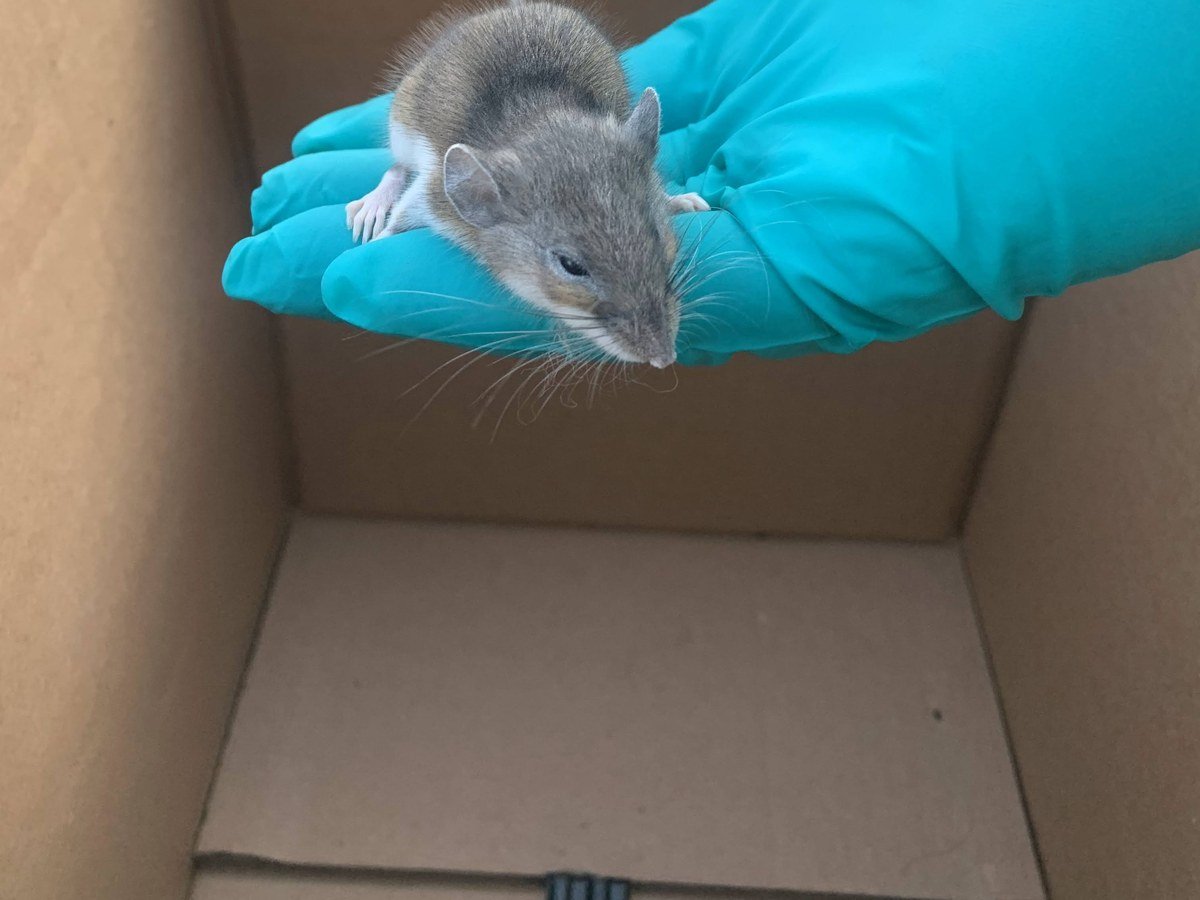
GTA Mouse Removal
Contact Us






Help with mice in your walls, basement or kitchen, with a plan built around the gaps they travel through, not only the spot where you saw one.
Skedaddle removes mice from walls, basements, attics and kitchens across Toronto and the Greater Toronto Area, from Oshawa and Newmarket to Mississauga and Burlington. Winter is when our GTA team sees mouse activity peak. Every job starts with an inspection from the foundation to the roof. We use one-way doors where appropriate so the mice leave, seal each gap with steel screening and sealant, and clean up where needed.
A mouse in the kitchen is usually the visible end of a longer route through the house. Our GTA team builds each job around that route, from the gap outside to the nest inside.
We confirm it's mice, then trace the path they're using. That means walking the foundation, brickwork, utility lines, vents and roof line, and checking the spaces inside where mice travel and nest.
Where appropriate, one-way doors let the mice leave on their own and stop them from coming back through the same gap. Then we seal the rest of the openings we found, so the house stays closed after we leave.
Every entry point we seal carries our lifetime guarantee on all workmanship and materials. If a sealed point fails, we come back and repair it. The guarantee covers the exclusion work set out in your quote.
Most people hear mice or find what they leave behind long before they see one. Here's what usually points to mice, and what we check when we arrive.

Scratching or scurrying inside walls and ceilings at night, chewed food packages, and a musky smell. The City of Toronto's Mammals of Toronto guide notes that a house mouse's presence is often first noticed by the odour of its urine. Droppings are dark and rod-shaped, about 6 mm long, according to the City of Toronto's rodent control page.
A mouse can pass through an opening about 6 mm wide, as our Durham team explains in its post on older homes. Common routes are foundation cracks, worn mortar, the sill plate, gaps beside gas and plumbing lines, dryer vents and loose trim. Mice also climb brick walls and drain pipes to reach soffits and roof vents.
A mouse's teeth never stop growing, so it chews wood, wires and insulation. House mice usually stay within 10 to 30 feet of their nest, inside walls, between floors, in cupboards and under counters. We map how far the droppings reach, what's been chewed and which gaps are active.
Scratching in the walls could be mice, a rat or a squirrel. Our technician will confirm the animal and show you how it's getting in before anything is quoted.
Most mice we find in GTA homes are house mice. The City of Toronto describes them as brownish grey above and light grey underneath, with a pointed snout and a dark tail slightly longer than the body. The Mammals of Toronto guide says that in Ontario they live in close association with towns and cities, are mostly active at night, and are good jumpers, climbers and swimmers. Closer to fields and woodland, the deer mouse also turns up. Health Canada's pest control tips describe it as brown or grey with a white belly and feet, and notes it may move into buildings near fields and woods as the weather cools.
House mice breed quickly, and they can breed throughout the year. After a gestation of about 19 to 21 days, a female has 3 to 14 young, usually 6 to 8, and she can have 5 to 10 litters a year. Her young can breed within about six weeks. That's why a handful of mice can become a much bigger job within a season, and why we focus on the way in, not only the mice you've seen.
GTA housing gives mice plenty of options. In older Toronto homes, foundations settle, mortar wears and soffits pull away over time, as our Toronto team describes in its older-homes post. Upgrades and additions bring their own weak spots, where newer utility lines, vents and foundations meet the original walls. Either way, mice nest close to food in places that are hard to reach.
Every mouse job starts with a look at the whole house, from the foundation and brickwork up to the roof line and back inside. We confirm where the mice are active, how they're getting in and which gaps they could use next. Then we write up the removal, sealing and cleanup your home needs.
Your technician walks you through what they found and leaves an itemized written quote on site, so you know the plan and the price before any work begins.

We trace every route into the house, from the foundation to the roof. Then we place one-way doors over the active openings where appropriate, so the mice can leave to find food but can't get back in.

Once the mice are out, we remove droppings and nesting material from the areas they used. We decontaminate those spaces and replace insulation where it was soiled, as set out in your quote.

We seal the entry points and every other gap we found, using heavy-gauge steel screening and our wildlife exclusion sealant. Weep holes and vents get metal screening that lets air move but keeps mice out. All of it carries our lifetime guarantee on all workmanship and materials.
Mice are active in GTA homes all year, but the reasons they get in and the way we plan a job shift with the seasons.
| Season | What may change | What it means for the homeowner |
|---|---|---|
| Winter(Dec–Feb) | Our Toronto team sees the biggest spikes in mouse and rat activity from November through February. Once mice find food indoors, they may stay all winter in walls, basements and attics. | Mice that are already inside won't leave on their own. Sealing now also stops more from joining them. |
| Spring(Mar–May) | House mice keep breeding. Gestation takes only 19 to 21 days, and a female can have 5 to 10 litters a year. | A few mice can become many by summer. The sooner the gaps are closed, the smaller the job. |
| Summer(Jun–Aug) | Young mice can breed within about six weeks, and our Toronto team has seen dry summers push mice toward homes. | A good time to have the whole house checked and sealed before colder weather. |
| Fall(Sep–Nov) | Cooler weather and shrinking food supplies outside send mice looking for shelter indoors. | Call at the first scratching or droppings. We'll trace every way in and seal it. |
Because mice can pass through an opening about 6 mm wide, we seal every gap we find, not only the ones in use today.
With mice, how they get in matters more than how many you've seen. Here's how we approach a mouse job.
Where one-way doors are appropriate, they go on only after we've found the active openings, so the mice leave on their own to find food and can't get back in. Our approach doesn't rely on poison, which can leave mice to die inside walls and attics.
House mice breed year-round, and one female can have 5 to 10 litters a year. Trapping a few mice doesn't stop the rest of the group, or the next ones, from using the same gap. Closing the gaps does.
Mice leave droppings and urine wherever they travel and nest, and rodent droppings can carry disease. We remove droppings, nesting material and soiled insulation, decontaminate the affected areas and restore insulation where it's needed.
We seal the gaps mice used and the weak spots around them, using heavy-gauge steel screening and our wildlife exclusion sealant. Weep holes still need to drain, so they get screening rather than being filled. Our lifetime guarantee covers all workmanship and materials on the exclusion work in your quote.
Tell us what you're hearing and where. We'll inspect the house from the foundation to the roof, find every way in, and set out the removal, sealing and cleanup in a written quote.
Skedaddle removes mice across the Greater Toronto Area: in Toronto, North York and Scarborough; in Oshawa, Whitby, Ajax and Pickering in Durham Region; in Markham and Newmarket in York Region; in Mississauga in Peel Region; and in Oakville and Burlington in Halton Region.
Much of the GTA sits beside green space. Toronto's ravine system runs more than 300 kilometres and covers about 17 per cent of the city's land, according to the City of Toronto's Ravine Strategy report. Homes that back onto those valleys in North York, Scarborough and the older east end sit right at the edge of woodland.
To the east and north, Rouge National Urban Park spans parts of Toronto, Markham and Pickering, running from Lake Ontario up to the Oak Ridges Moraine. The moraine itself stretches about 160 kilometres from the Trent River to the Niagara Escarpment, according to Ontario's Oak Ridges Moraine page. Homes near fields and woods there are where deer mice are more likely to come in with the house mice.
The age of the housing matters too. Oshawa's heritage inventory alone lists more than 500 properties, and freezing, thawing and moisture keep working on mortar, foundations and trim, as our Durham team notes in its older-homes post. Out west, Burlington backs onto the Niagara Escarpment at Mount Nemo Conservation Area, one of Conservation Halton's parks.
Our GTA team knows these houses. General Manager Tisha Hicks has led the Toronto and Durham Region locations since 2017 and writes many of our local mouse posts, and Field Supervisor Colin Sears, a graduate of Fleming College's Fish & Wildlife program, trains and mentors our new technicians. Whether it's a downtown semi, a Scarborough bungalow or a new build in Whitby, we follow the same steps: find every way in, get the mice out and seal the house.
Have a question about mice in your home? Here are the ones we hear most.
The cost depends on how many entry points your home has, how hard they are to reach, how many one-way doors are needed and how much cleanup is involved. Sealing one gap by a basement window is a smaller job than a whole foundation and roof line. We inspect first and leave an itemized written quote on site.
Same-day service is often available, and many customers mention our quick response in their reviews. It isn't guaranteed, because availability depends on crew scheduling and the time of year. If mice are active in your kitchen or living space, tell the office right away. Those calls get priority, the same as with our Ottawa team.
We start by finding every way in, from the foundation to the roof. Then we place one-way doors over the active openings where appropriate, so mice can leave to find food but can't get back inside. Once they're out, we seal those openings and every other gap we found, and clean up what the mice left behind.
Skedaddle removes mice across the GTA: Toronto, North York and Scarborough; Oshawa, Whitby, Ajax and Pickering in Durham Region; Markham and Newmarket in York Region; Mississauga in Peel Region; and Oakville and Burlington in Halton Region. Call (289) 801-0601 with your address and we'll confirm service.
Our lifetime guarantee covers all workmanship and materials on the entry points we seal as part of your mouse job. If one of those sealed points fails, we come back and repair it. The guarantee applies to the exclusion work in your quote, not to parts of the house we didn't seal.
Cleanup is assessed during the inspection and written into your quote when the space needs it. That can include removing droppings and nesting material, decontaminating the area and replacing insulation the mice soiled. We don't assume every attic or basement ceiling needs all of its insulation replaced.
Our approach doesn't rely on poison. Poison and traps may deal with the mice inside today, but they don't close the gaps that let the next ones in, and poisoned mice can die inside your walls. We use one-way doors where appropriate to get the mice out, then seal the house so they can't come back.
Mouse droppings can be a health risk. Rodent droppings, urine and nesting material can carry disease, and Health Canada notes the deer mouse is the most common carrier of hantavirus in Canada, although infections are rare. Sweeping or vacuuming droppings can stir particles into the air, so our technicians handle that cleanup.
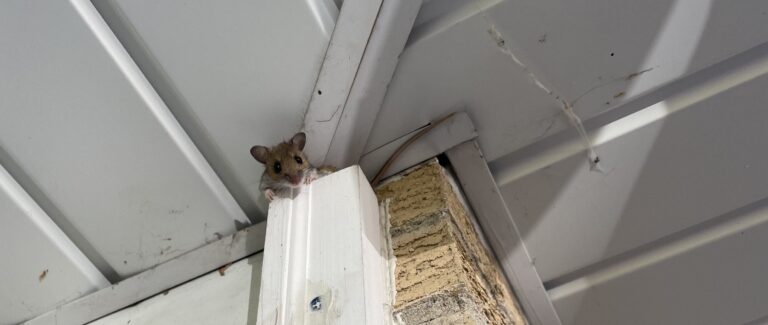
Over the past few weeks, you've noticed tiny droppings along the walls, holes chewed in pantry boxes, and the sound of skittering and scratching…
Read the full article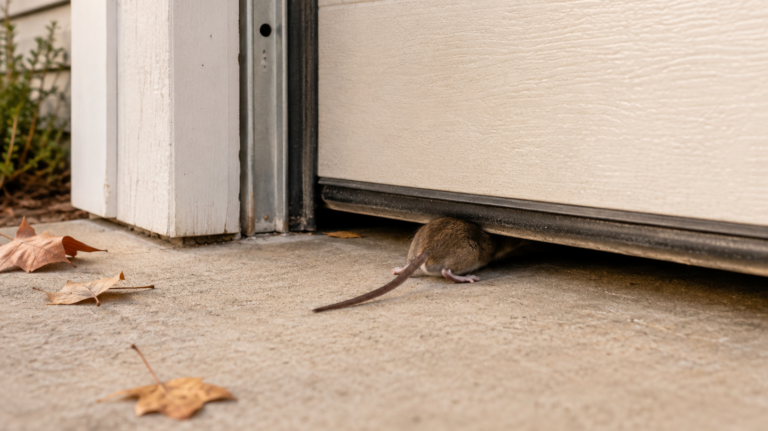
Sharing your home with mice is never a good idea. Unwanted rodent guests often carry contagious diseases and can damage the structure of your…
Read the full article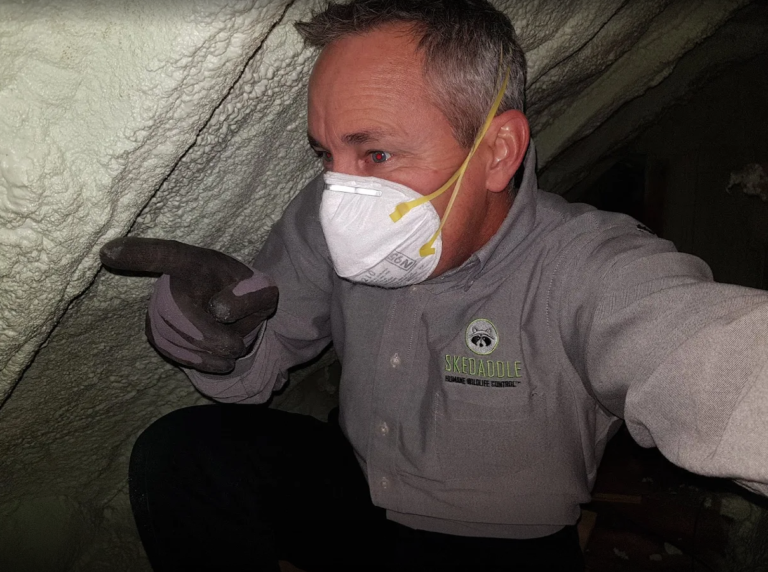
Rodents are not usually aggressive to humans, but because they often carry contagious diseases, having mice in your home can be dangerous. Mice enter…
Read the full articleSkedaddle has been removing wildlife humanely since 1989. We plan every GTA mouse job around how the mice are getting in, and we back our sealing work with a lifetime guarantee on all workmanship and materials. We'll inspect your home, get the mice out humanely, seal every gap and clean up wherever the inspection shows it's needed.
 menu