Help with skunks under your deck, shed or porch, with a plan built around the den, the young and a buried barrier they can't dig under.
Skedaddle removes skunks from under decks, sheds, porches and steps across Toronto and the Greater Toronto Area, from Oshawa and Newmarket to Mississauga and Burlington. Every job starts with an inspection to find the den and check for young. Any babies are carried out by hand into a heated reunion box, adults leave through one-way doors where appropriate, and we bury an L-shaped screen so skunks can't dig back in.
Lifetime guarantee on all workmanship and materials
Why homeowners choose Skedaddle
Skunk calls are fewer than most, but they're rarely calm ones. Our GTA team builds each skunk job around the den, any young inside it and the ground around the structure.
An inspection that starts at ground level
We confirm it's a skunk, then find the den under the deck, shed, porch or steps and check for babies. We look along the whole structure and the foundation edge too, because a skunk shut out of one spot will dig at the next.
Humane removal, family first
Any babies are carried out by hand and placed in a heated reunion box, so their mother can move them herself. Where appropriate, a one-way door lets adult skunks leave and stops them from getting back in. We only seal the den once the whole family has gone.
A guarantee on the work we do
Every screen we bury and every entry point we seal carries our lifetime guarantee on all workmanship and materials. If a sealed point fails, we come back and repair it. The guarantee covers the exclusion work set out in your quote.
Signs of skunks and how they get in
Skunks are active mostly at night, so most people notice the signs before they see one. Here's what usually points to a skunk, and what we check when we arrive.
SIGNS
Signs worth checking
A musky smell near a deck, shed or foundation, even without spraying, plus small holes near the base of the structure, disturbed soil and tracks in soft ground, as General Manager Tisha Hicks describes in her post on skunks drawn to your property. Small round holes in the lawn and rolled-up sod are another clue: skunks dig for grubs, especially after rain.
DEN SITES
How skunks get in
Skunks den under decks, sheds, porches and front steps, especially where a raised structure leaves open ground beneath it. They're strong diggers and burrow easily below these structures. Woodpiles, rocks and debris give them cover too.
DEN AND YOUNG
What our inspection checks for
Where the den entrance is, whether it's active, and whether a mother is raising young inside. A skunk denned under a deck or shed heading into spring is likely pregnant or already nursing, Tisha notes in the same post. We also note what's drawing it in, such as grubs, garbage or pet food.
Not sure what is under your deck?
Digging under a deck or shed could be a skunk, a raccoon or a groundhog. Our technician will confirm the animal, check for young and show you where it's getting in before anything is quoted.
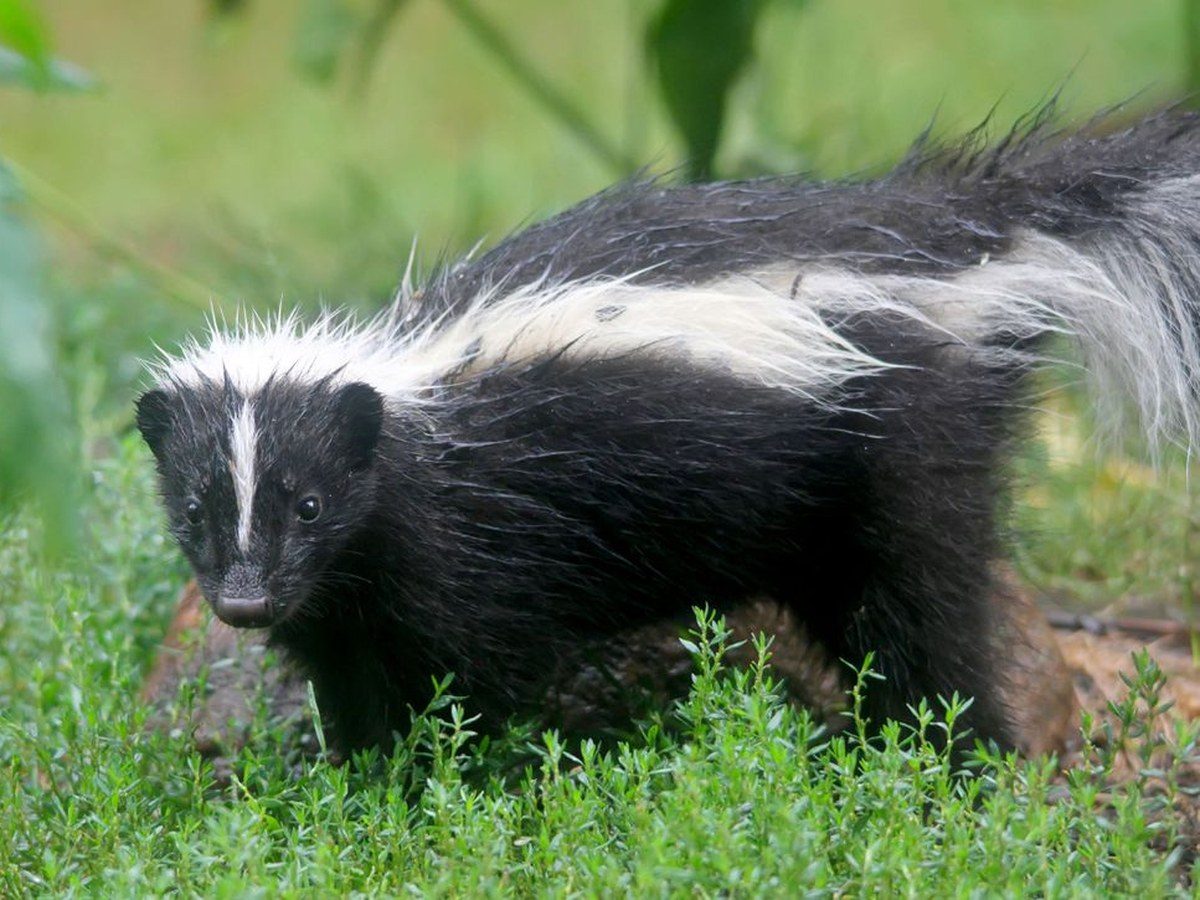
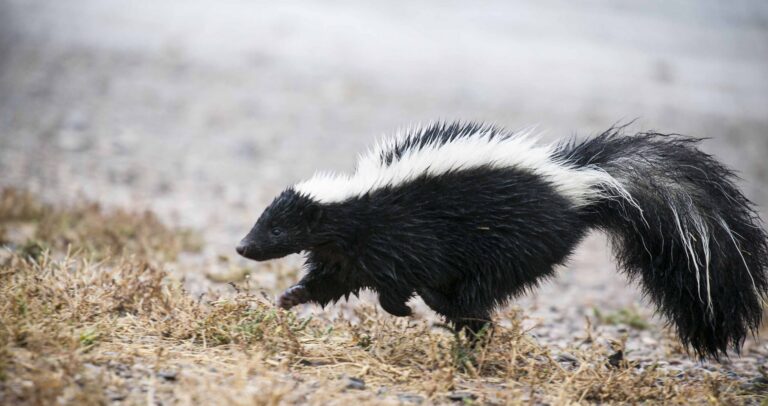
The striped skunk is the skunk GTA homeowners deal with. Skunks are burrowing animals, so the spaces under porches, sheds, woodpiles, rocks and debris are an open invitation, according to the City of Toronto's skunk guidance for residents. They're attracted to lawns and gardens for grubs, and to garbage, pet food and open compost. Skunks aren't aggressive animals, and they only spray when they feel threatened. A skunk gives warning first by stamping its front feet, raising its tail and turning its rear toward the threat, and it can spray up to about 3 metres (10 feet), the City notes.
Skunks don't fully hibernate. In the cold, they go into a lighter sleep called torpor and may go days or weeks without leaving the den, as Tisha Hicks explains in her post on whether skunks hibernate. They breed in February and March and often reuse the same winter den year after year. Female skunks often stay in their winter den into spring to give birth and raise their young. Litters arrive in May and June, and the babies depend on their mother for the first couple of months.
That's why timing shapes every GTA skunk job. The City of Toronto advises against one-way doors from April to September, when skunks are raising young, unless the babies can move on their own, and warns that an animal sealed into a den will die. So we check every den for babies, carry any we find out by hand, and only seal the den once the whole family has gone. Live-captured wildlife may not be released more than one kilometre from where it was caught under Ontario's wild animal rules, so we don't move skunks away from your property.
What to expect from a Skedaddle inspection
Every skunk job starts outside, at ground level. We confirm it's a skunk, find the den and every spot where it could dig in, and check for young. Then we write up the removal, screening and cleanup your property needs.
Species and den: We confirm it's a skunk, not a raccoon or groundhog, find the den entrance and check whether it's in use.
Young and timing: Whether a mother is raising babies in the den, which decides how the removal is done and when the den can be sealed.
Structure and ground: The full length of the deck, shed, porch or steps, the foundation edge and the soil, which decide how much screen is needed and how it's buried.
Removal, screening and cleanup scope: Whether a one-way door is needed and where it goes, where the screen barrier runs and which den areas need cleaning or deodorizing.
Your technician walks you through what they found and leaves an itemized written quote on site, so you know the plan and the price before any work begins.
Skedaddle's Three-Step Wildlife Removal Process
Step 1
Assess and Remove
We find the den and check for young. Any babies are carried out by hand and placed in a heated reunion box beside the den, so their mother can move them herself. Where appropriate, a one-way door lets adult skunks leave but not get back in.
Once the skunks are out, we clear nesting and soiled material from the den area, reduce the odour there and treat the scent markers that can draw other wildlife, where the inspection shows it's needed and as set out in your quote.
We dig a trench around the structure and bury a heavy-gauge galvanized steel screen 8 to 12 inches deep, bent into an L-shape so skunks can't dig under it, then backfill and seal the den. All of it carries our lifetime guarantee on all workmanship and materials.
Skunks live on a calendar set by winter dens and spring litters, and the way we plan your removal follows it.
Season
What may change
What it means for the homeowner
Winter(Dec–Feb)
What may changeSkunks rest in dens in torpor and may not leave for days or weeks. They breed in February and March.
What it means for the homeownerA good time to screen the ground under decks and sheds, before mothers settle in with young.
Spring(Mar–May)
What may changeFemale skunks look for protected dens under decks, sheds and porches to give birth. The City advises against one-way doors from April unless the young are mobile.
What it means for the homeownerIf a skunk is under your deck, there may be babies. We check before anything is sealed and carry any young out by hand.
Summer(Jun–Aug)
What may changeLitters arrive in May and June and depend on their mother for the first couple of months. Later, young skunks start roaming.
What it means for the homeownerWe use the reunion box for any young still in the den, then install barriers under decks and sheds.
Fall(Sep–Nov)
What may changeSkunks eat more to build fat reserves, so lawns see more digging for grubs. They also look for a warm winter den.
What it means for the homeownerThe best time to get a skunk out is before it settles in for winter. Screen the ground before the soil freezes.
Removing a skunk without dealing with what drew it in leaves room for another one to move in, so we screen the whole structure, not only the hole in use today.
A humane approach to skunk removal
With skunks, the young and the ground decide most of the job. Here's how we approach it.
Removal led by the inspection
One-way devices are only installed when they suit the situation, never by default. Where a one-way door is appropriate, it goes on only after we've found the den and checked for babies, so adults leave to feed on their own and can't get back in.
Keeping the young in the removal plan
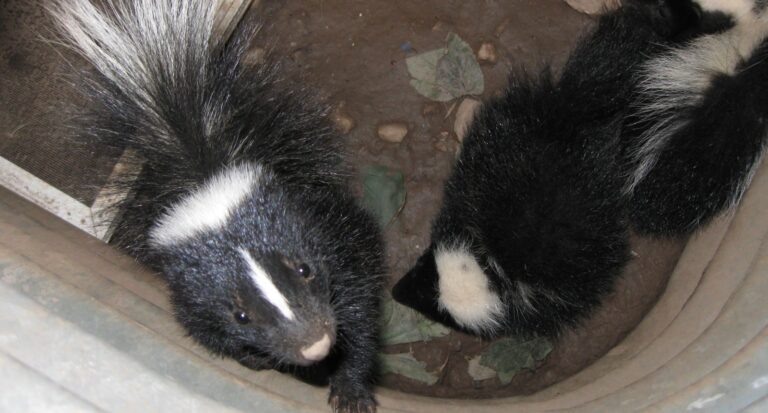
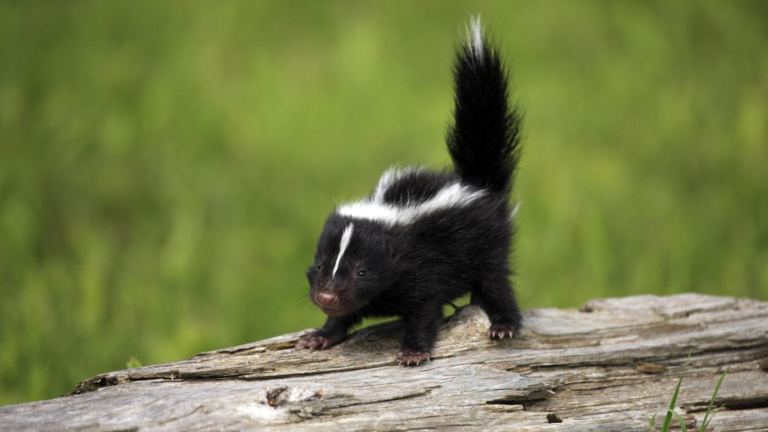
Baby skunks can't leave the den on their own for their first couple of months. If we find babies, we carry them out by hand and settle them in a heated reunion box beside the entry, so their mother can move them to a new den herself. We only seal the den once the whole family has gone, so nothing is trapped inside.
Cleanup and odour
A skunk's smell can linger around a den, and pheromone markers left behind can attract other wildlife. Where the inspection shows it's needed, we clear soiled material from the den area, reduce the odour and treat those markers. We don't treat sprayed pets or people.
Long-term exclusion
We bury a heavy-gauge galvanized steel screen 8 to 12 inches deep around the deck, shed or porch, bent into the L-shaped "prevention skirt" the City of Toronto recommends. Our lifetime guarantee covers all workmanship and materials on the exclusion work in your quote. Parts of the property we didn't screen aren't covered.
Ready for a property-specific plan?
Tell us what you're seeing and where. We'll inspect the deck, shed or porch, find the den, check for young, and set out the removal, screening and cleanup in a written quote.
In Toronto, the Don and Humber valleys, the 160-hectare High Park and the waterfront give skunks green pathways straight into city backyards. Toronto's ravine system runs more than 300 kilometres and covers about 17 per cent of the city's land, according to the City of Toronto's Ravine Strategy report. In North York, those corridors carry skunks into residential streets, and our team relies on a buried screen barrier under decks, porches and sheds, ideally before skunks breed in February and March.
The city's mature trees, garden beds and older properties with gaps under decks and sheds give skunks easy shelter, as Tisha Hicks explains in her post on why skunks are drawn to your property. A lawn full of grubs, an unsecured garbage bin or a bowl of pet food left outside can be enough to keep a skunk coming back, the post notes.
Beyond the city, the same pattern holds. Homes from Oshawa and Pickering to Markham, Newmarket, Mississauga, Oakville and Burlington have decks, sheds, porches and front steps with open ground beneath them, and that's where skunks den. Whatever the community, the fix works at grade: skunks can't climb well, so we dig a screen barrier below the surface so they can't tunnel back in.
Our GTA team knows these yards. General Manager Tisha Hicks has led the Toronto and Durham Region locations since 2017 and writes many of our local skunk posts, and Field Supervisor Colin Sears, a graduate of Fleming College's Fish & Wildlife program, trains and mentors our new technicians. Whether it's a deck backing onto a North York ravine, a shed in Whitby or a front porch in Mississauga, we follow the same steps: find the den, protect the young and screen the ground.
Frequently asked questions about skunk removal
Have a question about skunks at your home? Here are the ones we hear most.
How much does skunk removal cost in the GTA?
The cost depends on where the skunk is denning, whether there are babies, how long the structure is and how much screening it needs, and how hard the ground is to dig. A small porch step is a different job from a large deck. We inspect first and leave an itemized written quote on site before any work begins.
Can you remove skunks the same day I call?
Same-day service is often available, and many customers mention our quick response in their reviews. It isn't guaranteed, because availability depends on crew scheduling and the time of year. A skunk that has got into your living space gets priority, the same as with our Ottawa team, so tell the office right away when you call.
How do you get rid of skunks humanely?
We find the den and check for babies first. Where appropriate, a one-way door lets adult skunks leave to feed but not get back in. Babies are carried out by hand into a heated reunion box so their mother can move them. Once the den is empty, we bury an L-shaped steel screen around the structure.
What happens if there are baby skunks under my deck?
Baby skunks arrive in May and June and depend on their mother for the first couple of months. We carry them out by hand and place them in a heated reunion box beside the den, so their mother can move them to another den herself. We only seal the area once the whole family is gone.
Which areas do you serve?
Skedaddle removes skunks across the GTA: Toronto, North York and Scarborough; Oshawa, Whitby, Ajax and Pickering in Durham Region; Markham and Newmarket in York Region; Mississauga in Peel Region; and Oakville and Burlington in Halton Region. Call (289) 801-0601 with your address and we'll confirm service.
What does the guarantee cover?
Our lifetime guarantee covers all workmanship and materials on the screening and entry points we install or seal as part of your skunk job. If one of those fails, we come back and repair it. The guarantee applies to the exclusion work in your quote, not to parts of the property we didn't screen.
Can you get rid of the skunk smell?
Where the inspection shows it's needed, we clear soiled material from the den area, reduce the odour there and treat the scent markers that can draw other wildlife. We don't treat sprayed pets or people. If a pet has been sprayed, the City of Toronto advises calling your veterinarian.
Do skunks carry rabies?
They can. Skunks are one of Ontario's rabies reservoir species, along with bats, raccoons and foxes. Keep people and pets away from any skunk, especially one acting strangely. Anyone who may have been exposed should contact their local public health unit, and pet owners should call their veterinarian first.
GTA Wildlife Resources & Guides
Skunks
Toronto Wildlife Control: Why Are Skunks Attracted To Your Property?
Skunks are attracted to properties that offer two things: food and shelter. If your yard has either of these, there's a good chance you'll…
Skedaddle has been removing wildlife humanely since 1989. We plan every GTA skunk job around the den and any young, and we back our screening and sealing work with a lifetime guarantee on all workmanship and materials. We'll inspect your deck, shed or porch, get the skunks out humanely, bury a screen they can't dig under and clean up the den area wherever the inspection shows it's needed.