An inspection that starts at the roofline
We confirm it's bats, then look for the gaps they use at the roof peak, chimney flashing, dormers, soffits and vents. Inside, we find the roost and how far the droppings reach.
GTA Bat Removal
Contact Us






Help with bats in your attic, walls or living space, with a plan built around Ontario's exclusion windows and every small gap they use to get in.
Skedaddle removes bats from attics, walls and rooflines across Toronto and the Greater Toronto Area, from Oshawa and Newmarket to Mississauga and Burlington. Every job starts with an inspection to find the roost and every gap bats use. We follow the Ontario MNR bat exclusion guide, so we never exclude bats while flightless pups are inside. We use one-way doors where appropriate, clean up droppings and seal the roofline.
Bats are small, protected and on a strict calendar. Our GTA team builds each bat job around where the colony roosts, the gaps it uses and the times of year the province allows an exclusion.
We confirm it's bats, then look for the gaps they use at the roof peak, chimney flashing, dormers, soffits and vents. Inside, we find the roost and how far the droppings reach.
Where appropriate, one-way doors let bats leave to feed and stop them from getting back in. We only install them in the windows the Ontario MNR bat exclusion guide allows, so no pups are left behind. Then we seal the rest of the gaps we found.
Every entry point we seal carries our lifetime guarantee on all workmanship and materials. If a sealed point fails, we come back and repair it. The guarantee covers the exclusion work set out in your quote.
Bats are quiet and active at night, so most people notice the signs before they see a bat. Here's what usually points to bats, and what we check when we arrive.
Small, dark droppings that crumble easily and collect in piles below the roost, often with shiny bits of insects inside, plus light scratching, squeaking or fluttering above the ceiling at dusk or early morning and a musty smell that doesn't fade, as our Toronto team's post on bats in the attic describes. Dark staining around gaps and vents and bats leaving the roofline at dusk are other clues.
Bats get in at the roof peak, along chimney flashing and around dormers, often without leaving visible damage. A gap of about a quarter of an inch is enough, and a soffit, vent or loose piece of trim can hide one, according to General Manager Tisha Hicks's post on why bats keep returning.
Where the colony roosts, how big it is and where in the breeding cycle it is, which decides when it can be excluded. We map how far the droppings and urine reach, what's been stained or soiled and which gaps are active.
Scratching above the ceiling could be bats, birds or squirrels. Our technician will confirm the animal and show you how it's getting in before anything is quoted.
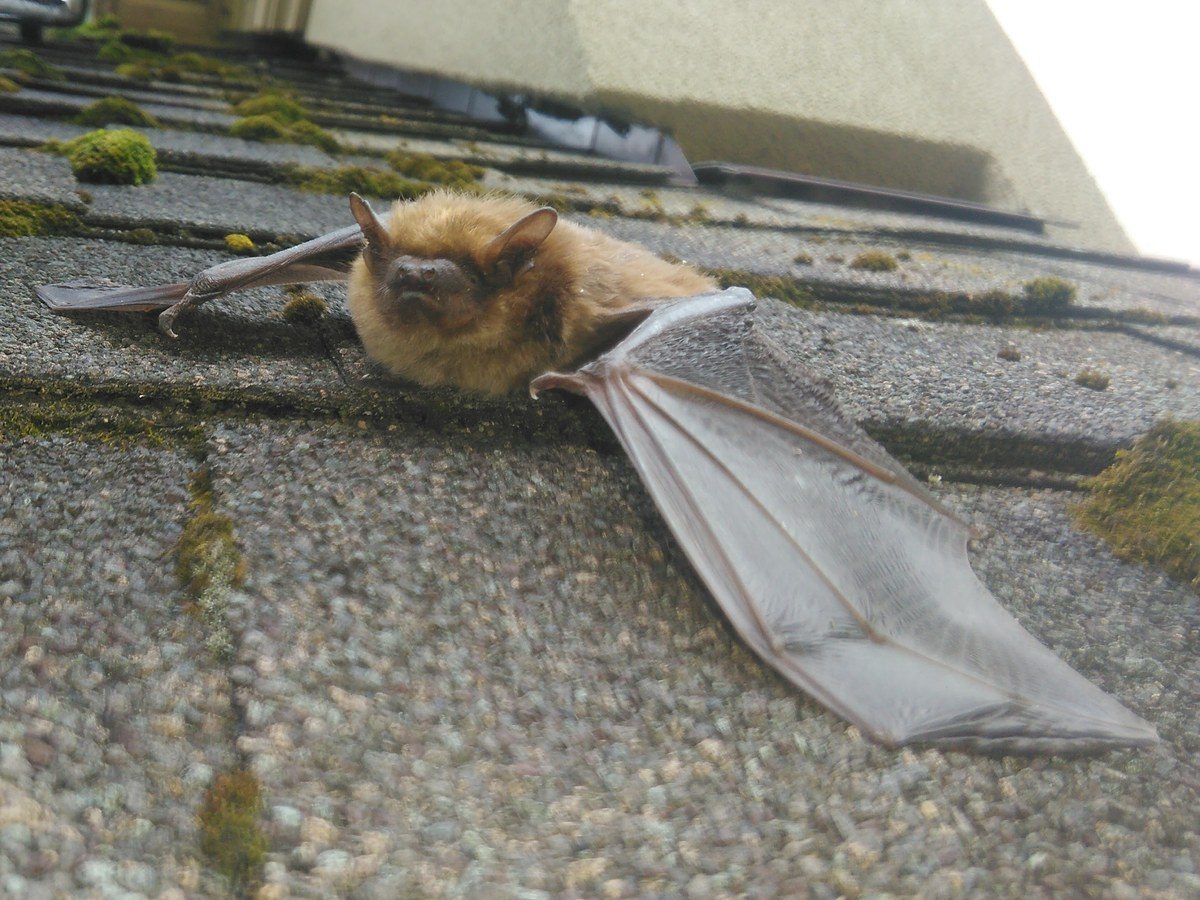
Only seven bat species regularly occur in Toronto, according to the City of Toronto's Mammals of Toronto guide. The big brown bat is by far the most commonly reported, probably because it roosts in attics and the eaves of buildings. The little brown bat, the other common "house bat", is less common in the city and more often found around woodlands and streams. Both are small: the guide puts the big brown bat at 14 to 20 grams and the little brown bat at 6 to 12 grams. Only the big brown bat is known to hibernate in buildings; Toronto's other bats leave for the winter, many of them for caves and abandoned mines.
Bats are protected. The little brown myotis, northern myotis and tri-colored bat are listed as endangered under Ontario's Endangered Species Act, which prohibits harming or harassing them or damaging their habitat without authorization, and the little brown myotis is the one that most often uses buildings for maternity colonies, according to the Government of Ontario's response statement for these bats. Each mother raises a single pup a year, and bats are loyal to roosts that have worked before, so the same colony often returns to the same home every summer, as Tisha Hicks explains in her post on why bats keep returning.
That's why timing shapes every GTA bat job. We follow the Ontario MNR bat exclusion guide, which is guidance rather than law. The guide allows one-way doors from April until early May and from late August until November, and rules out any eviction from mid-May until mid-August, when flightless pups will die if they're separated from their mothers. From December until the end of March, it's a good time to seal entrances completely, but only once no bats remain, because forcing out bats in winter would likely kill them. In short, timing is set by the province, not by us.
Every bat job starts outside, at the roofline, then moves into the attic. We confirm it's bats, find the roost and every gap they could use, and work out which exclusion window applies. Then we write up the exclusion, sealing and cleanup your home needs.
Your technician walks you through what they found and leaves an itemized written quote on site, so you know the plan, the timing and the price before any work begins.

We find the roost and every gap the bats use. Then, in a window the Ontario MNR bat exclusion guide allows, we install one-way doors where appropriate, so the bats can leave to feed but can't get back in.

Once the bats are out, we remove the droppings from the areas they used, disinfect the space and replace soiled insulation where needed, as set out in your quote.

We seal the entry points and every other gap we found along the roofline, using Skedaddle's wildlife exclusion sealant and durable materials made to stand up to the weather. All of it carries our lifetime guarantee on all workmanship and materials.
Bats live on a calendar set by hibernation and pups, and the Ontario MNR bat exclusion guide follows it. Here's what each season means for a bat job in the GTA.
| Season | What may change | What it means for the homeowner |
|---|---|---|
| Winter(Dec–Feb) | Big brown bats may be hibernating in attics and walls. The Ontario guide calls this a good time to seal entrances completely, but only once no bats remain. | We check that no bats are inside before a complete seal. If bats are hibernating, we plan the exclusion for April. |
| Spring(Mar–May) | Bats return to their roosts. From April until early May, before pups are born, one-way doors can be installed. | The window is short. Book the inspection early so the exclusion can happen before mid-May. |
| Summer(Jun–Aug) | The maternity period runs from mid-May to mid-August, and flightless pups are in the roost, so exclusion is restricted. If a colony shares your home, July and August are when you're most likely to meet a bat in the living space. | We can keep bats out of your living space and plan the work, then complete the exclusion after mid-August. |
| Fall(Sep–Nov) | From late August until November, the pups can fly and some bats remain, so one-way doors can be installed again. | The last exclusion window before winter. Get the roofline closed before bats settle in to hibernate. |
Because a gap of about a quarter of an inch is enough for a bat, we seal every gap we find, not only the ones in use today.
With bats, when the work happens matters as much as how. Here's how we approach a bat job.
One-way devices are only installed when they suit the situation, never by default. Where one-way doors are appropriate, they go on only after we've found the active gaps, and only in a window the Ontario MNR bat exclusion guide allows. Bats leave to feed on their own and can't get back in.
Sealing a roost during the maternity period would trap flightless pups, and forcing bats out in winter would likely kill them. We check that no bats remain before anything is sealed completely.
Bats leave droppings, urine and staining where they roost, and the mess grows with the size of the colony and how long it's been there. We remove the droppings, disinfect the space and replace insulation where it's needed.
Once the bats are out, we seal every gap along the roofline, at soffits, vents, flashing and trim, so the colony can't come back next summer. A single missed opening can keep the cycle going, as Tisha Hicks explains in her post on why bats keep returning. Our lifetime guarantee covers all workmanship and materials on the exclusion work in your quote. Parts of the roofline we didn't seal aren't covered.
Tell us what you're seeing and where. We'll inspect the roofline and attic, find every gap, and set out the timing, sealing and cleanup in a written quote.
Skedaddle removes bats across the Greater Toronto Area: in Toronto, North York and Scarborough; in Oshawa, Whitby, Ajax and Pickering in Durham Region; in Markham and Newmarket in York Region; in Mississauga in Peel Region; and in Oakville and Burlington in Halton Region.
In Toronto, the bat we find in homes is usually the big brown bat, which roosts in attics and the eaves of buildings, according to the City of Toronto's Mammals of Toronto guide. Summer attic noises are common in neighbourhoods with mature trees, nearby parks, ravines and older rooflines, as our Durham team's post on summer attic noises explains.
The GTA's green spaces keep bats close to homes. Toronto's ravine system runs more than 300 kilometres and covers about 17 per cent of the city's land, according to the City of Toronto's Ravine Strategy report. Beyond the city, Rouge National Urban Park spans parts of Toronto, Markham and Pickering, the Oak Ridges Moraine stretches 160 kilometres across the region's northern edge, and Burlington backs onto the Niagara Escarpment at Mount Nemo. Woodlands and streams are where little brown bats are more often found, the Mammals of Toronto guide notes, and those green spaces sit right beside many GTA neighbourhoods.
Bats turn up across the region. In Ajax, our team gets winter calls from homeowners surprised to find bats hibernating in their homes, as Tisha Hicks describes in her post on bats hibernating in Canadian homes. In Burlington, the big brown bat is the bat most often found inside houses, according to our Burlington bat post. In Oakville, Business Development Manager Brandon Crawford's post on a bat in the house notes that older homes, newer homes and houses with additions can all have gaps at the roofline that are hard to see from the ground.
Our GTA team knows these houses. General Manager Tisha Hicks has led the Toronto and Durham Region locations since 2017 and writes many of our local bat posts, and Field Supervisor Colin Sears, a graduate of Fleming College's Fish & Wildlife program, trains and mentors our new technicians. Whether it's a Riverdale semi with an old roofline, a Markham home near the Rouge or a house in Oakville with a newer addition, we follow the same steps: find the roost and every gap, time the exclusion to the province's guide and seal the roofline.
Have a question about bats at your home? Here are the ones we hear most.
The cost depends on the size of the roost, how many gaps along the roofline need sealing, how hard they are to reach and how much droppings cleanup the attic needs. One gap at a dormer is a different job from a whole roofline. We inspect first and leave an itemized written quote on site before any work begins.
Same-day service is often available, and many customers mention our quick response in their reviews. It isn't guaranteed, because availability depends on crew scheduling and the time of year. A bat flying around inside your house gets priority, the same as with our Ottawa team, so tell the office right away. Roost exclusions follow provincial timing.
We find the roost and every gap the bats use. Then, in the windows the Ontario MNR bat exclusion guide allows, we install one-way doors where appropriate, so bats leave to feed but can't get back in. Once they're out, we seal every opening and clean up the droppings they left behind.
It depends on the time of year. The Ontario MNR bat exclusion guide allows one-way doors from April until early May and from late August until November, and rules out exclusion from mid-May to mid-August while flightless pups are inside. In winter, openings are sealed only once no bats remain. You can book an inspection any time.
Skedaddle removes bats across the GTA: Toronto, North York and Scarborough; Oshawa, Whitby, Ajax and Pickering in Durham Region; Markham and Newmarket in York Region; Mississauga in Peel Region; and Oakville and Burlington in Halton Region. Call (289) 801-0601 with your address and we'll confirm service.
Our lifetime guarantee covers all workmanship and materials on the entry points we seal as part of your bat job. If one of those sealed points fails, we come back and repair it. The guarantee applies to the exclusion work in your quote, not to parts of the roofline we didn't seal.
Cleanup is assessed during the inspection and written into your quote when the attic needs it. Bat droppings, also called guano, pile up below the roost. We remove them and disinfect the space, and replace insulation where droppings and urine have soiled it. We don't assume every attic needs a full restoration.
Keep your distance, keep others out of the room and call us. Don't touch, chase or try to catch it. Toronto Public Health's advice on bats and rabies notes that rabies in bats is rare, but anyone who may have had physical contact with a bat should see a healthcare provider right away. Our team handles the removal and finds how it got in.
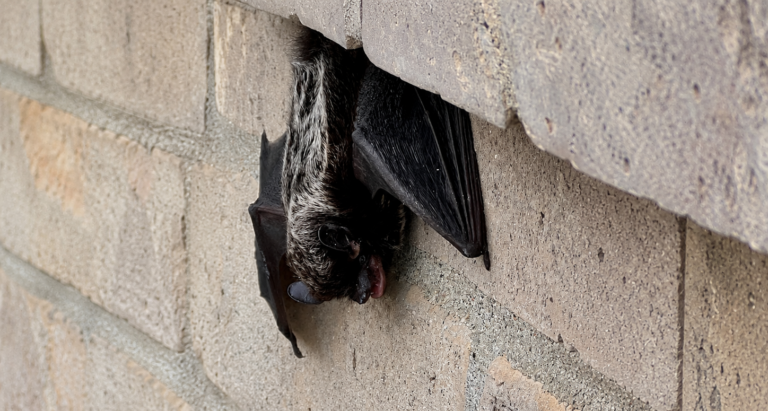
Bats keep returning to the same home every summer because they remember it as a safe, warm place to raise their young, and they're…
Read the full article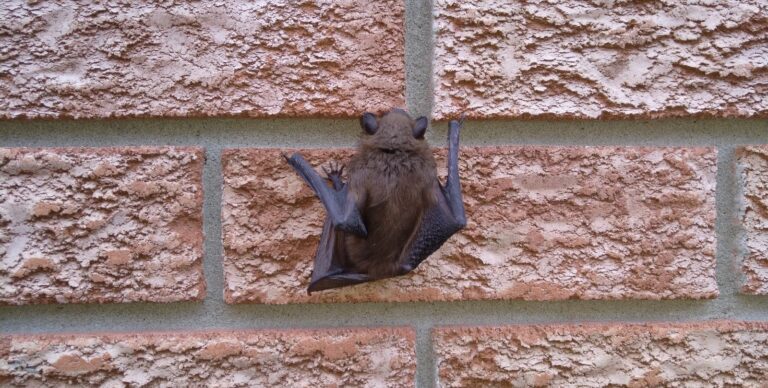
You may hear light scratching above your ceiling late at night or notice a strange smell that doesn’t seem to have a clear source.…
Read the full article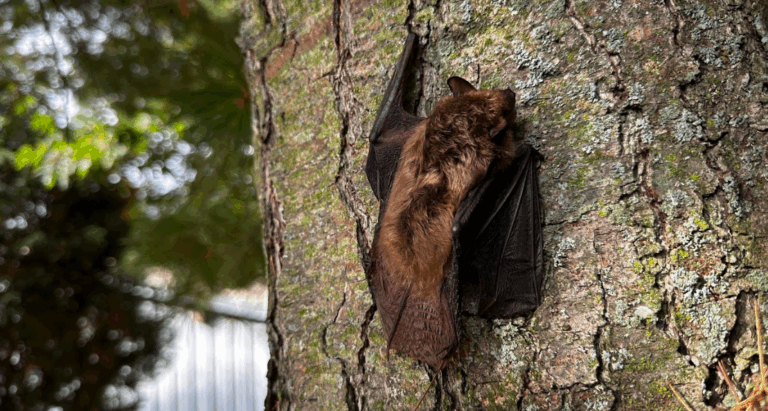
When winter hits in Canada, most people bundle up indoors, enjoying warmth while snow covers the ground. But you may not be the only…
Read the full articleSkedaddle has been removing wildlife humanely since 1989. We plan every GTA bat job around the colony, its gaps and the province's exclusion windows, and we back our sealing work with a lifetime guarantee on all workmanship and materials. We'll inspect your roofline and attic, get the bats out humanely at the right time, seal the way in and clean up wherever the inspection shows it's needed.
 menu